- Details
- Written by: John C Burke
- Category: Transnational Repression
- Hits: 636
 JOINT POSITION PAPER
SUBMITTED TO THE JOINT COMMITTEE ON HUMAN RIGHTS (JCHR)
House of Commons | House of Lords | Westminster | London SW1A 0AA
ZIMBABWE: TRANSNATIONAL REPRESSION, CONSTITUTIONAL CRISIS, AND THE INADEQUACY OF CURRENT UK PROTECTIVE FRAMEWORKS
Submitted by: MRTV | ZAPU | ZHRO | CCC Diaspora | ROHR | WoZ
12 May 2026 | Contact: | www.zhro.org.uk |
1. EXECUTIVE SUMMARY
This joint position paper is submitted to the Joint Committee on Human Rights by seven organisations representing the United Kingdom’s Zimbabwean diaspora community. It is presented in the context of the JCHR’s report HC 681 (July 2025), which found that current UK protective frameworks for those facing transnational repression are “inadequate,” and the Government’s response committing to ongoing review.
We submit that Zimbabwe presents one of the most fully documented cases of state-directed transnational repression operating on UK soil that the Committee has yet received. We call on the Committee to formally name Zimbabwe as a state conducting transnational repression in the United Kingdom and to press the Government to act accordingly.
This submission addresses four interconnected concerns:
- The systematic use of transnational repression instruments — including the Varakashi digital militia, Zanu PF UK & Europe, the Patriotic Act, and a new dimension of coordinated digital inauthentic behaviour — against diaspora activists on UK soil.
- Constitutional Amendment Bill No. 3 (CAB3) and the fabricated consensus that has been deployed to present it internationally as a legitimate democratic process.
- The irreconcilable contradiction at the heart of current UK foreign policy toward Zimbabwe, as evidenced by the Government’s own parliamentary statements.
- The inadequacy of current Home Office country guidance on Zimbabwe, which fails to account for the documented infrastructure of transnational repression and the specific criminalisation of diaspora political activity under Zimbabwean law.
- Details
- Written by: Milton Bingwa
- Category: CAB3 Implications
- Hits: 412
 Zimbabwe’s CAB3: why a petition at Downing Street matters
LONDON, 21 April 2026
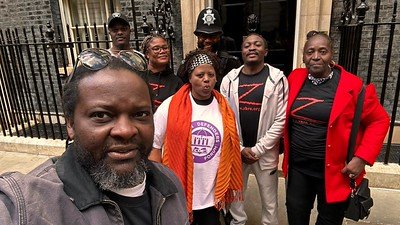
Zimbabwean activists gathered outside 10 Downing Street this week to witness the handover of a petition opposing the Constitution Amendment Bill No. 3 (CAB3), a proposal by Emmerson Mnangagwa widely criticised as a threat to democratic governance in Zimbabwe. Although I was not physically present, as a Zimbabwean human rights activist I recognise the significance of that moment. It reflects a growing concern among Zimbabweans, both at home and in the diaspora, about the direction of constitutional reform.
A diaspora stepping into the space
The petition, organised by the Zimbabwe Human Rights Organisation (ZHRO) under John Burke, represents a coordinated effort by Zimbabweans in the United Kingdom to challenge what they view as a dangerous constitutional shift. It took organisers four weeks of persistence to reach the doors of 10 Downing Street, an indication of both the determination behind the campaign and the realities of engaging even within established democratic systems.
Importantly, this petition forms part of a broader, sustained strategy. Prior to this, submissions were made in response to CAB3 through detailed technical arguments, alongside proposals for an updated constitutional framework. Taken together, these efforts reflect a long-term approach to activism, one that combines advocacy, legal analysis and institutional engagement. For many in the diaspora, such action has become a necessity. There is a widely held view that diaspora voices help amplify concerns that cannot always be expressed freely within Zimbabwe itself.
As activists, we are acutely aware that we speak for our sisters and brothers in Zimbabwe who are unable to do so openly due to fear of being targeted by the state. The risks of arrest, harassment, violence or worse, remain real.
The petition and its authors
The petition submitted at Downing Street was supported by a group of individuals:
- John Burke (Organiser only)
- Charles Kanyimo
- Phylis Melody Magejo
- Elizabeth Chitengo
- Genius Khatazile Mamwadhu
- Josephine Sipiwe Jenje-Mudimbu
- Kelvin Thembinkosi Mhlanga
The document itself is a comprehensive and fully referenced critique, setting out detailed arguments as to why CAB3 is considered fundamentally undemocratic.
It is publicly available, including the full written submission, at:
zhro.org.uk - 21st April 2026 petition delivered
Read more: Zimbabwe’s CAB3: why a petition at Downing Street matters
- Details
- Written by: John C Burke
- Category: ZEXIT
- Hits: 505
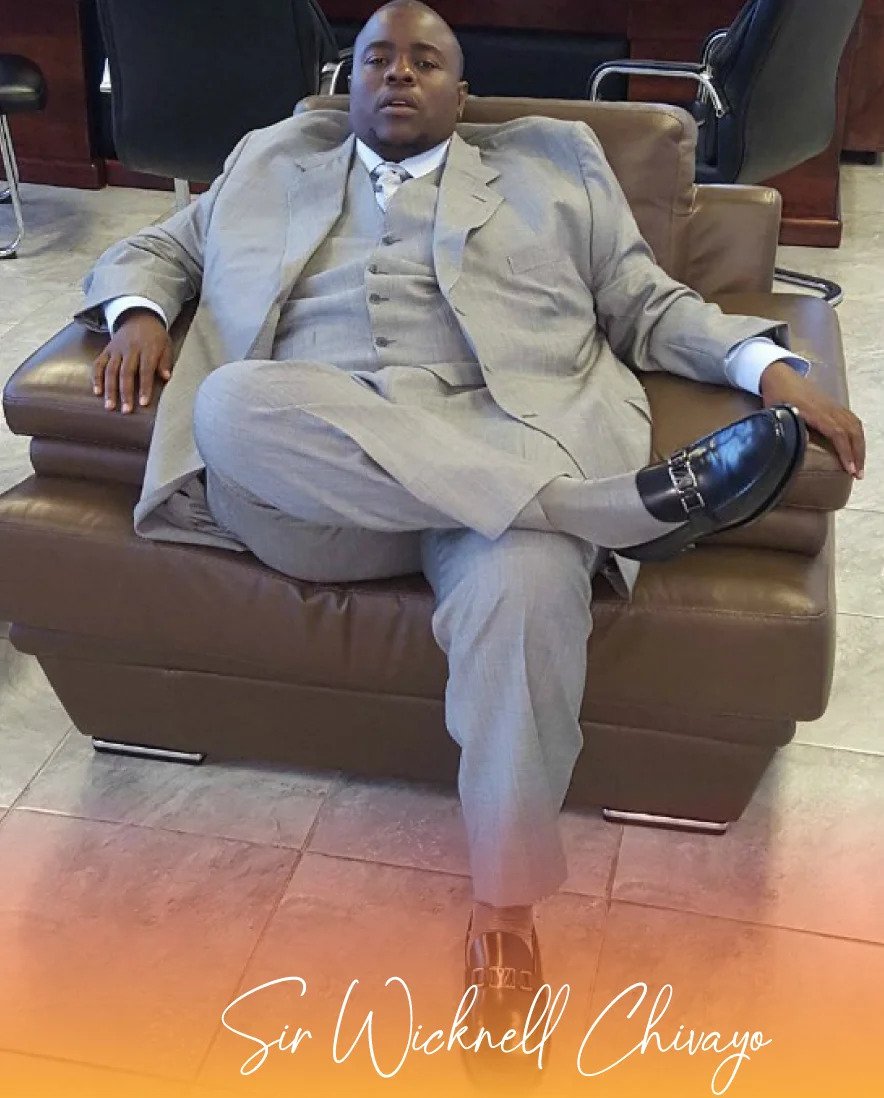 Wicknell Chivayo — SA High Court Asset Freeze: Confirmed ✅
The Tweet's claim is accurate and well-corroborated. Here's what can be confirmed: [SEE TWITTER Post HERE @Devro_Amplified] -
The Court Order
The Gauteng Division of the High Court in Pretoria issued an order on 23 April 2026 freezing bank accounts and key assets linked to Chivayo, including his private jet, which he has now been barred from accessing. Justice Teffo revived an earlier interim anti-dissipation order first granted on 20 January 2026, effectively reinstating restrictions that prevent Chivayo and associated entities from accessing or dealing with the listed assets. allAfrica.com
The inclusion of multiple major banks, the deeds registry, and corporate entities in the order suggests a broad financial trail is being pursued, aimed at preventing the dissipation of funds across accounts, properties, or complex corporate structures. ZimEye
What Triggered It
The applicant is Chivayo's ex-wife, Louise Sonja Madzikanda, who is seeking to secure her share of the couple's estate while divorce proceedings continue before the Harare High Court. This is a civil divorce matter — not a criminal prosecution — but the scale of what is being claimed is remarkable. allAfrica.com
- Details
- Written by: Blessing Tariro Makeyi
- Parent Category: CAB3 Implications
- Category: Gender Commission
- Hits: 785
Silencing the Shield: How CAB3 Will Destroy Zimbabwe's Last Line of Defence for Women
#NoToCAB3 | #NoTo2030 | #ProtectTheZGC
A Commission Born From Struggle
The Zimbabwe Gender Commission was not handed to Zimbabwean women as a gift. It was written into the 2013 Constitution after decades of feminist organising, civic pressure, and the hard testimony of women who had survived gender-based violence with no institutional recourse and no dedicated body to hear their grievances. Section 245 of the Constitution established the ZGC as an independent body — with its own mandate, its own teeth, and direct accountability to Parliament, not to the Executive.
That independence was the point. That independence is now the target.
Constitutional Amendment Bill No. 3 proposes to fold the ZGC into a broader, generalised Human Rights Commission. Presented by ZANU-PF as administrative rationalisation, it is nothing of the sort. It is the deliberate dismantling of specialised protection for women and girls — executed quietly, dressed in bureaucratic language, and timed precisely when Zimbabwean women can least afford to lose their institutional shield.
What the ZGC Does — and Who Loses It
The ZGC investigates gender discrimination. It monitors compliance with international instruments including CEDAW and the SADC Protocol on Gender and Development. It receives complaints from women across the country — rural women, survivors of domestic violence, women denied inheritance, girls pulled out of school — and it pursues those complaints through a framework built specifically for gendered harm.
That specialisation is not bureaucratic luxury. It is operational necessity.
Gender-based violence does not operate like other human rights violations. It moves through patriarchal systems, cultural silences, economic dependencies, and institutional blind spots that a generalist human rights body is structurally ill-equipped to interrogate. A woman reporting marital rape to a generalised commission risks being handled by officers untrained in trauma-informed engagement. A girl denied her father's estate risks her case being filtered through frameworks that treat customary succession as a generic human rights matter — when it demands a gender justice remedy.
The ZGC holds that specialist knowledge. Amendment 3 dissolves it.
- Details
- Written by: Blessing Masunda - Change Radio
- Category: 46 Years as at 18th April 2026
- Hits: 389
 The Price of a Representative—Gifts, Greed, and the Betrayal of the People
Follow Change News WhatsApp Channel ` https://whatsapp.com/channel/0029Vb
Zimbabwe stands at a moral crossroads where the line between public service and private gain has not just been blurred—it has been erased. As the majority of our citizens navigate a daily reality of abject poverty, struggling to secure basic meals and healthcare, a jarring spectacle of opulence is unfolding in the corridors of power.
The recent reports regarding Budiriro North MP Susan Matsunga are not merely disappointing; they are a visceral blow to the stomach of the electorate. The news that a representative of the people allegedly received a luxury vehicle and significant cash from businessman Wicknell Chivhayo raises a question that strikes at the very heart of our democracy: Who do these MPs actually represent?
The Optics of Excess
There is something inherently sickening about a "gift-giving" culture that targets the powerful while the powerless "wallow." When a businessman with deep-rooted connections to the state apparatus begins distributing luxury assets to members of the opposition, we must move past the facade of "philanthropy." In a functioning democracy, an MP’s primary loyalty belongs to the constituents who queued in the sun to cast their ballots. When those same MPs accept high-value "donations" from private individuals, that loyalty is immediately compromised. You cannot serve two masters. You cannot claim to be the voice of the poor while driving a car gifted by the architect of a patronage system that keeps those people poor.
Page 2 of 19