- Details
- Written by: Mondli Makhanya on dailymaverick.co.za
- Category: Beyond CAB and Dictatorships
- Hits: 476
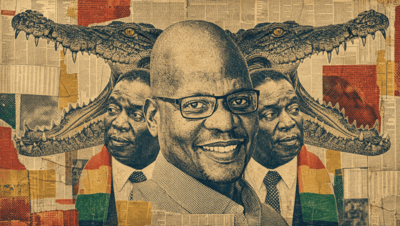 Prominent Zimbabwean businessman and newspaper publisher Trevor Ncube penned a spine-chilling piece on Substack this week about how, in 2024 and 2025, newspapers in his stable were intimidated into to apologising for and withdrawing stories that revealed President Emmerson Mnangagwa’s intention to extend his term beyond the constitutionally stipulated end in 2028.
The intimidation came in a writ from Mnangagwa’s lawyers demanding that the respective stories be taken down within 48 hours or pay damages of up to $22-million, which would accrue daily if not paid. On both occasions the newspapers, faced with the might of one of the country’s most formidable legal firms and representing the most powerful (and one with deep pockets), buckled. They knew their reporting was 100% on point but the idea of facing obviously malicious litigation that could bring them to their knees convinced them to live to fight another day.
Anyway, about two weeks ago, Mnangagwa signed constitutional amendments that will see him extend his term until 2030, what Ncube described as “the very outcome our newspapers warned about”. This is despite consistently denying for years that he had any such intentions and taking that drastic step of threatening NewsDay and The Standard.
The amendments will see the scheduled 2028 elections cast aside, the presidential and parliamentary terms increased from five years to seven and a shift from the system of the president being directly elected by voters to one where the head of state will be chosen by parliament. This may not sound controversial to South Africans where the president is elected by the National Assembly. There are many other jurisdictions around the world that operate this way, Zanu-PF and its apologists have argued, so it is not intrinsically undemocratic. They are not wrong.
- Details
- Written by: Urbium Research Ltd
- Category: Beyond CAB and Dictatorships
- Hits: 624
 Zimbabwe's Power, Water and Sewage:
One System Collapsing, Not Three
By Sun Earth Energy Ltd, in association with Urbium Research Ltd
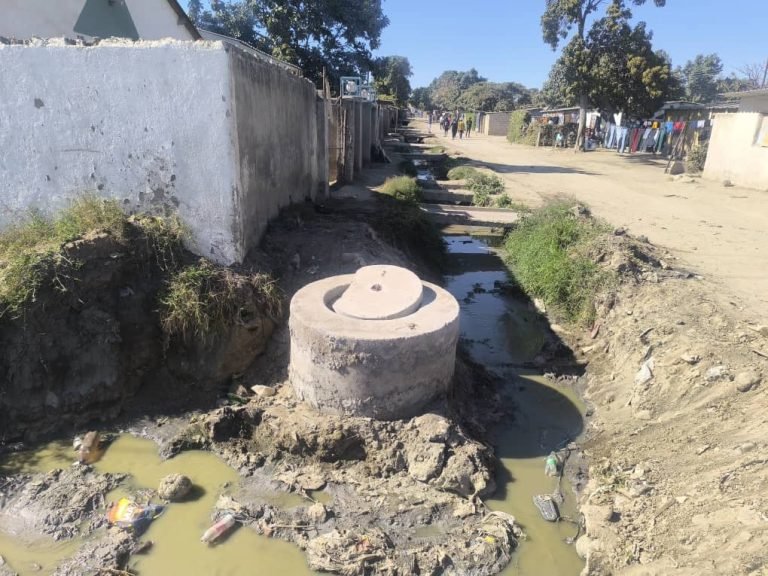
Zimbabwe doesn't have an electricity crisis, a water crisis and a sanitation crisis. It has one crisis, playing out across three 'pipes'.
That's the core finding of a diagnostic briefing prepared by Sun Earth Energy Ltd and its research affiliate Urbium Research Ltd, drawing on Auditor-General reporting, Human Rights Watch investigations and peer-reviewed epidemiology. The evidence shows that Zimbabwe's power grid, water treatment and sewage network are physically interdependent — and that chronic underinvestment in one has been quietly degrading the other two for two decades.
A grid with no margin for error
Zimbabwe currently generates around 866MW against a national demand of roughly 2,400MW — a shortfall that produces daily load-shedding of up to 16 hours even in ordinary conditions. But the more telling pattern is what happens when something goes wrong. In January 2024, a single busbar fault at the Insukamini substation in Bulawayo took down the entire national grid. In 2025, a fire at Harare's Highfield substation knocked out four neighbouring substations in one go, plunging Southerton, Old Ardbennie, Rugare and parts of Mbare into darkness. Most recently, a fault on the Warren–Alaska 330kV line again brought down power nationwide, forcing ZESA to pull emergency supply from South Africa, Kariba, Cahora Bassa and Hwange simultaneously.
That's not bad luck. It's what a grid with no redundancy looks like — and redundancy costs money that a 2019 forensic audit, commissioned by Zimbabwe's own Auditor-General, found had been diverted elsewhere: inflated transformer contracts, obsolete equipment purchases, and spending that never reached maintenance budgets at all.
- Details
- Written by: John C Burke
- Category: Beyond CAB and Dictatorships
- Hits: 625
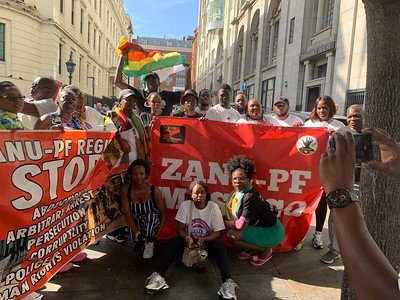 Zimbabweans in the UK Held Demonstration Against CAB3 at Zimbabwe Embassy
in London On the 10th of July 2026,
Zimbabweans and supporters gathered outside the Zimbabwean Embassy in London for a peaceful demonstration opposing Constitutional Amendment Bill No. 3 (CAB3) and expressing wider concerns about constitutional rights, democracy, governance, and the rule of law in Zimbabwe.
The demonstration was conducted peacefully and lawfully, with participants calling for respect for Zimbabwe’s 2013 Constitution and the democratic rights of its citizens. Organisers emphasised that the protest was a peaceful expression of civic participation and encouraged all attendees to remain respectful and non-violent throughout the event.
Defending the 2013 Constitution
Many participants expressed the view that the Constitution belongs to the people and should not be altered in ways they believe undermine democratic principles. Demonstrators argued that constitutional reforms should reflect the will of Zimbabwean citizens and preserve the values enshrined in the 2013 Constitution.
Throughout the demonstration, protesters called on Zimbabweans both at home and in the diaspora to organise peacefully, remain united, and continue advocating for constitutional governance through lawful means. They stressed that their campaign is rooted in peaceful civic action and respect for the law.
Several of the messages shared by participants focused on defending the Constitution, rejecting what they see as attempts to weaken it, and holding elected representatives accountable to the people who elected them. Some speakers also described CAB3 as contrary to the spirit and principles of the 2013 Constitution.
- Details
- Written by: Joint Petition with Chief Ndiweni
- Category: Beyond CAB and Dictatorships
- Hits: 758
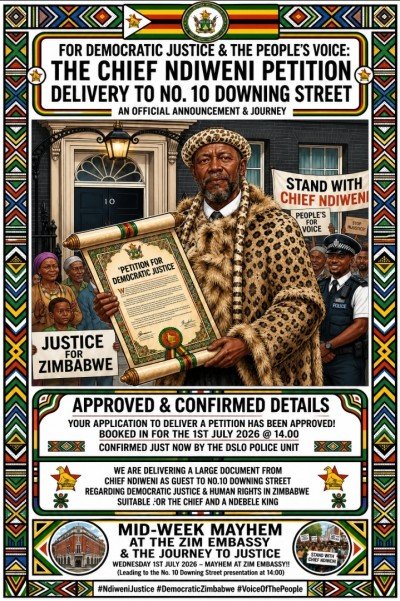 Chiefs and other traditional leaders are unelected, hereditary figures who serve as the primary local governance structure in rural areas, acting as custodians of cultural values, customs, and communal land while also performing administrative and judicial functions within their communities. In rural Zimbabwe, chiefs control land allocation and access to communal resources and resolve disputes.
Section 281(2) of the 2013 Constitution emphatically provides that traditional leaders must not be members of any political party or in any way participate in partisan politics or act in a partisan manner or further the interests of any political party. Clause 20 of CAB3 would repeal s 281(2).
However, what you may not know or appreciate, is that the Lancaster House agreement was never fully 'completed' as the petition clearly makes plain to the readers of both history and the corruption of CAB3.
Chief Ndiweni frames the present moment as the irrevocable breakdown of the Lancaster House Agreement of 21 December 1979. Industrial-scale corruption, the collapse of the rule of law, and — decisively — the current administration’s shredding of the 2013 Constitution have, in his account, nullified the settlement on which independent Zimbabwe was built. He records that the proposition of a two-state solution is not new: it was raised at Lancaster House itself by the late Paramount Chief Khayisa Ndiweni, who warned that a unitary state forced upon two historically distinct nations risked “crafting another failed African state.”
Within three years of independence, that warning was vindicated by genocide.
A Nation with a History and a Lineage
The Matabele Nation is part of the greater Nguni grouping of Southern Africa. Chief Ndiweni traces its foundation to King Mzilikazi of the Royal House Khumalo, who departed the Zulu kingdom in 1823 and, over a seventeen-year journey through what are now South Africa, Botswana and Zambia, built a nation by assimilation before establishing his kingdom between the Zambezi and the Limpopo by 1840. He was succeeded by King Lobengula, whose reign was overtaken by the discovery of gold, the fraudulent Rudd Concession, and the war with Cecil Rhodes’s British South Africa Company. Lobengula was never captured, killed or made to surrender; he disappeared into the landscape in 1893 — a fact, Chief Ndiweni argues, that has sustained the Nation’s sense that it was never truly defeated.
The Jameson Line and the Historical Two-State Reality
Central to Chief Ndiweni’s argument is that the territory was, in historical fact, two states divided by the Jameson Line — Matabeleland and Mashonaland — a division reaffirmed by the peace negotiated between the Matabele and Rhodes after the 1896 uprising. Even under colonial administration, he records, the two retained separate high courts, reserve banks, state houses, economic systems and traditional-leadership structures. The unitary state of 1980 was therefore an imposition upon a pre-existing dual reality, not a natural unit.
- Details
- Written by: Shorayi Spencer Guzha
- Category: Beyond CAB and Dictatorships
- Hits: 749
 Beyond Zimbabwe's Borders: The Human Cost of Governance Failures
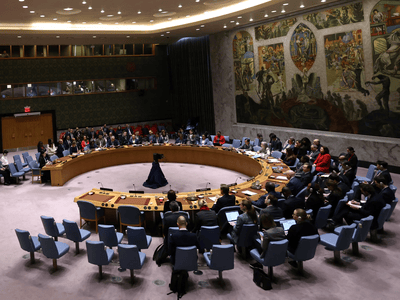
Any assessment of Zimbabwe's Security Council membership must also consider the experiences of millions of Zimbabweans beyond the country's borders.
For years, economic hardship, unemployment, and political uncertainty have contributed to large-scale migration from Zimbabwe to neighbouring countries, particularly South Africa. Many Zimbabweans have sought opportunities, safety, and economic stability across the Limpopo River. Yet their search for a better life has often exposed them to a different form of insecurity: xenophobia.
Recent anti-immigrant violence in South Africa has once again drawn attention to the vulnerability of foreign nationals, including Zimbabweans. Reports of attacks, displacement, intimidation, and even deaths linked to anti-migrant unrest have shocked the region and revived concerns about the protection of African migrants. South African authorities have condemned the violence, while neighbouring governments have expressed concern over the safety of their citizens.
The situation raises uncomfortable questions for both Harare and Pretoria.
For South Africa, recurring xenophobic violence challenges the country's long-standing image as a champion of African solidarity and human rights. For Zimbabwe, the continued exodus of citizens reflects unresolved domestic challenges that drive migration in the first place.
The irony is striking. Zimbabwe will soon occupy a seat on the United Nations Security Council, helping shape discussions on international peace, security, and human dignity. Yet many ordinary Zimbabweans continue to experience insecurity not in distant conflict zones but in their daily struggle for economic survival, political expression, and personal safety, whether at home or abroad.