- Details
- Written by: John C Burke
- Category: ZEXIT
- Hits: 477
 Rhodes Had a Business Plan — Does Zimbabwe's Ruling Elite?
Adapted for ZHRO from an original commentary by Tendai Ruben Mbofana, "At least Rhodes had established business interests: where are own ruling elite acquiring their wealth?" Mbofana is a Zimbabwean social justice advocate and writer. Follow his commentary on WhatsApp or contact him directly on +263 71 566 7700 /
There are some comparisons that simply make no sense — and one making the rounds in Zimbabwean commentary lately is among them. It's the loose equation of Cecil Rhodes and the British South Africa Company's colonial-era plunder with the wealth being amassed by Zimbabwe's current ruling elite.
As Mbofana argues in the commentary this article draws on, the comparison collapses under its own weight — not because Rhodes deserves any rehabilitation, but because of what set his enterprise apart even in its worst abuses: it was visible. Rhodes raised private capital, built mines, laid railways, founded towns, and left behind a corporate structure — the BSAC — that could be chartered, audited, and eventually held to account. Whatever one thinks of how that wealth was extracted, its provenance could be traced.
Zimbabwe's post-independence elite, the argument goes, cannot say the same.
A case study with a paper trail — of a different kind
The clearest illustration currently before Zimbabwe's courts is the case of Kelsea Tadiwa Tafirenyika, the 22-year-old wife of Collins Mnangagwa — one of President Emmerson Mnangagwa's twin sons, and by marriage the president's daughter-in-law.
- Details
- Written by: John C Burke
- Category: ZEXIT
- Hits: 702
Wicknell Chivayo — SA High Court Asset Freeze: Confirmed ✅
The Tweet's claim is accurate and well-corroborated. Here's what can be confirmed: [SEE TWITTER Post HERE @Devro_Amplified] -
The Court Order
The Gauteng Division of the High Court in Pretoria issued an order on 23 April 2026 freezing bank accounts and key assets linked to Chivayo, including his private jet, which he has now been barred from accessing. Justice Teffo revived an earlier interim anti-dissipation order first granted on 20 January 2026, effectively reinstating restrictions that prevent Chivayo and associated entities from accessing or dealing with the listed assets. allAfrica.com
The inclusion of multiple major banks, the deeds registry, and corporate entities in the order suggests a broad financial trail is being pursued, aimed at preventing the dissipation of funds across accounts, properties, or complex corporate structures. ZimEye
What Triggered It
The applicant is Chivayo's ex-wife, Louise Sonja Madzikanda, who is seeking to secure her share of the couple's estate while divorce proceedings continue before the Harare High Court. This is a civil divorce matter — not a criminal prosecution — but the scale of what is being claimed is remarkable. allAfrica.com
- Details
- Written by: Rumbidzai Thelma Chidewu
- Category: ZEXIT
- Hits: 779
 Why Amendment No. 3 is a Heartbreak for Zimbabwe
When we look at the red "WITHDRAW" sign on the Constitution Defenders Forum poster, we aren't just looking at a political slogan. We are looking at a desperate shield against a legislative spear aimed directly at the heart of our democracy: our right to choose our leaders and the independence of the courts that protect us.As Zimbabweans, our emotions are raw because Amendment Bill No. 3 (CAB3) isn't a "refinement"of the law—it is a dismantling of the 2013 promise.
The Stolen Vote: From People to Parliament
The most painful part of this bill is the proposal to scrap the direct popular election of the President. For decades, the "One Person, One Vote" principle was the crown jewel of our liberation struggle.
We stood in rain and sun to cast our ballots, believing that our individual voices mattered. If this bill passes, the President will be chosen by a joint sitting of Parliament. This shifts the power from the hands of 16 million Zimbabweans into the hands of a few hundred politicians. It feels like our citizenship is being downgraded; we are being told that we are no longer trusted to choose our own leader. This isn't just a policy change; it is an emotional eviction from our own democracy.
- Details
- Written by: John C Burke
- Category: ZEXIT
- Hits: 609
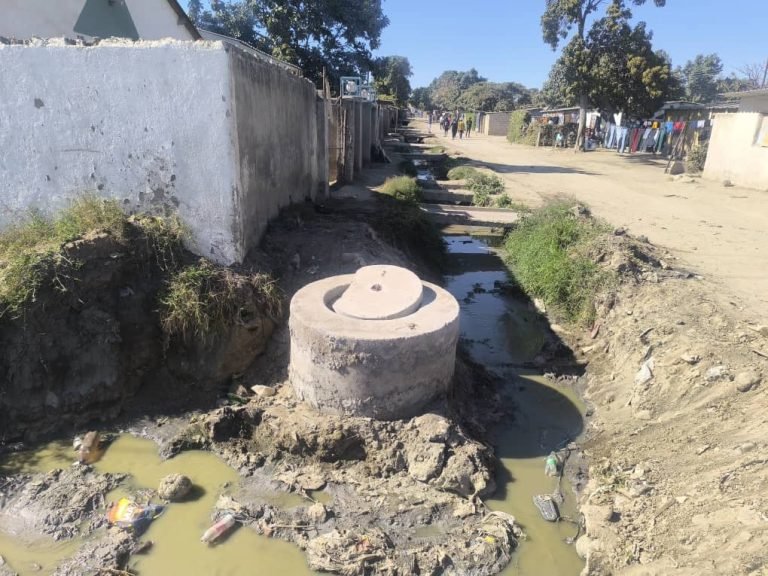 Harare's Broken Sewage System: A Public Health Crisis Rooted in Decades of Neglect
1. The Infrastructure: Built for a City That No Longer Exists
As ZHRO we have been acutely aware of this failed Infrastructure Issue for some time - we even posted a proposal to the then Foreign Office to sponsor a rebuilding project [November 2018] - specifically the Sewage System
The origins of Harare's sewage and water crisis lie in a fundamental mismatch between infrastructure age and population scale. The infrastructure for piped water in Harare was developed in the 1950s, before Zimbabwe's independence in 1980, and designed for a population of 300,000 people. Currently, Harare's greater metropolitan area has about 4.5 million people, more than half of whom have no access to clean water and are at risk of waterborne diseases such as cholera and typhoid. Human Rights Watch
For almost two decades after Zimbabwe's independence in 1980, Harare's water and sanitation infrastructure ran relatively smoothly. Human Rights Watch However, the piped infrastructure has not been maintained. The result of deterioration of the system combined with a significant increase in the population is that the water now runs only sporadically and is often contaminated. Human Rights Watch
- Details
- Written by: Gladys Kajawo
- Category: ZEXIT
- Hits: 446
 A Petition to 10 Downing Street: Challenging the Legitimacy of Cab3
A growing number of Zimbabweans in the diaspora alongside Supporters of democratic Governance are raising serious concerns about the structure and legitimacy of what has come to be known as Cab3. This petition [from ZHRO] is to be submitted to 10 Downing Street, calls for urgent scrutiny arguing that this body is fundamentally unconstitutional and undermines the principle it claims to be uphold.
At the heart of the criticism is the assertion that cab3 does not derive its authority from any transparent democratic or 'Constitutionally recognised'.
The process apprears to be a self constituted entity, lacking accountability and operation outside the framework that govern legitimate political representation. This raises troubling question about its mandate decision making process and who it truly represents.
Many critics argue that cabs structure mirrors the very Governance style, Zimbabweans have long resisted, rather than embodying democratic renewal -- its risks replicating centralised personality driven model of leadership one that priorities authority over accountability. Comparisons have been drawn to longstanding concerns about entrenched power in Zimbabwe politics were leadership is matained through assertion rather than consent.
This petition to the UK is urging officials to take these concerns seriously. As a Country that often positions itself as a supporter of democratic value and good Governance, The United Kingdom is being asked to critically assess any engagement with bodies whose legitimacy is in question. Recognition on informed endorsement of such entities. The petition argues risks undermining genuine democratic efforts and silencing credible voices within the Zimbabwe Community.
More importantly, it is not simply a political disagreement --- it is a Constitutional issue ,legitimacy in Governance depends on clear process accountability mechanisms and the consent of the governed without these, any claim to authority becomes questionable at best and harmful at worst.
The petition also reflects a broader restoration within the diaspora a desire for transparent inclusive leadership that genuinely reflects the aspirations of Zimbabweans both at home and abroad. Many feel that structure like Cab3 risk derailing progress by creating confusion division and competing claims to authority.
One thing remains clear calls for the accountability Constitutional integrity and democratic legitimacy are not going away.whether through petitions and advocacy or public hearings. Zimbabweans and their allies are demanding better and they are asking the international Community to pay attention.