- Details
- Written by: Independent80
- Category: ZEXIT
- Hits: 646
 How long should Zimbabwe be donor dependent?
The issue of the length of time the Zimbabweans will have to continue relying on the international donors is acute. Even with the international donor efforts to alleviate livelihoods by introducing different interventions, the government of Zimbabwe tends to misuse funds which are provided by various economic sectors.
Another major issue is when the projects funded by the donors are finished and have to be certified by one of the appropriate ministries. Government authorities in Zimbabwe are often heard to take 'credit' in these projects thus deceiving their populations by insinuating that the donors are simply reclaiming what is theirs or simply not acknowledging the contribution of the donors.
Furthermore, the government fails to make any assurance of the sustainability (see below) of these projects resulting in the degradation of structures and restoration to the normal state of suffering. The question that this cycle evokes is why various donors tend to repeat the same projects soon after. The corrupt nature of the Zimbabwean government incapacitates the communities and line ministries. It also, limits the sustenance of projects and sustenance of dependency as a result of donors. This has implications to the donors.
The projects that are launched today cannot be projected to be sustained on the local resources in the long run. The risk is infrastruct in Zimbabwe is dependent, effectively, on charity - something a legitamate goverment should never do. It is the function of a competent government to provide and maintain infrastucture and projects. Something sadly lacking in Zimbabwe as a whole - just look at the failed sewage and water supply problems and their knock on effect on public health - another area in desperate need of government support!
The present state of donor assistance cannot be perpetuated without the occurrence of a new dimension of priorities in the world. The donors also have not knowingly gotten into a continued agreement to supply resources to the government. The use of funding on particular projects is not usually of much benefit since it places too much strain on limited administrative expertise and the locals are not sustained. There are also security concerns, drought, and administrative limitation beyond the large cities, which contribute to the ineffectiveness of aid even more.
- Details
- Written by: Desire Munyaradzi KUNAKA with Claude AI as Research Assistant
- Category: ZEXIT
- Hits: 815
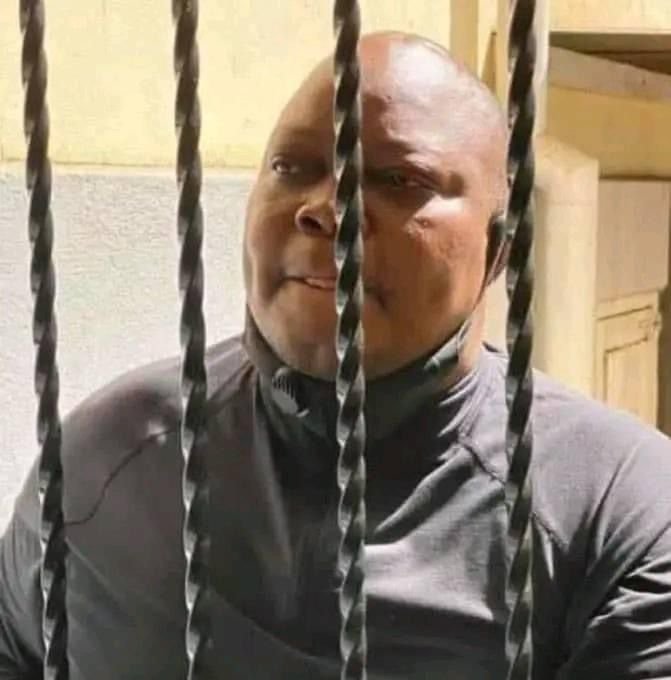 Political persecution in Zimbabwe remains a serious and ongoing issue under President Emmerson Mnangagwa's government. Here's an overview of the current situation:
Recent Pattern of Repression
The authorities have continued to weaponize the criminal justice system against perceived critics and the political opposition, with impunity for ruling party ZANU-PF violence, intimidation, harassment, and repression against opposition members and civil society activists restricting civic and political space.
Scale of Human Rights Violations
According to the Zimbabwe Peace Project, 7,292 people were affected by human rights violations in February 2025, a dramatic increase from 3,161 in January 2025 and 1,460 in December 2024. These violations included threats of violence, politically motivated assaults, unfair distribution of food aid, and restrictions on freedom of assembly, association and expression.
Mass Arrests and Detention
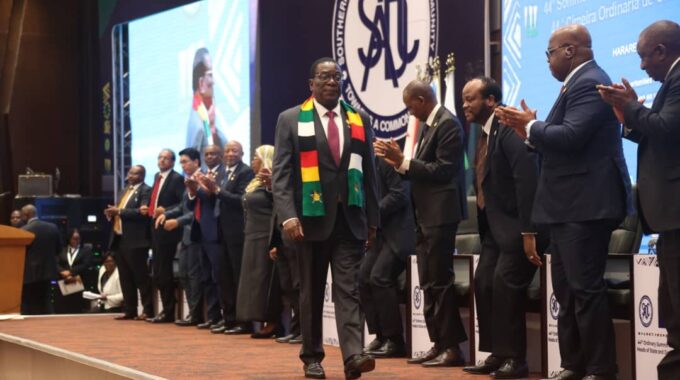
Ahead of the August 2024 Southern African Development Community summit in Harare, authorities intensified their crackdown, arresting more than 160 people, including a religious leader, elected parliament and council officials, political activists, union leaders, students, and journalists. While many were eventually acquitted or given suspended sentences, cases of abuse in custody were reported.
- Details
- Written by: Victor Simon and Claud ai
- Category: ZEXIT
- Hits: 1057
Hi Claude, I wonder if you are able to verify any of the following details obtained as a testimony from Victor Simon (a member of ZHRO) it is in regards on the torture of his parents by Zanu PF youths in June 2008. In their house at 5319 Epworth overspill, Harare. In respect of Mr Patric Simon (father) being a local chairman of MDC at that time. On the 27th June 2008 all 6 of the Simon family fled to South Africa - illegally entering SA across the Limpopo River. Mr Patric Simon died on 29th Oct 2008 and his wife on 24th March 2009 - both from their injuries during their torture. Can any of this be substantiated during the period in question - but give the mass intimidation campaigns by the regime AND the mass exodus from Zimbabwe during the 2008 elections?
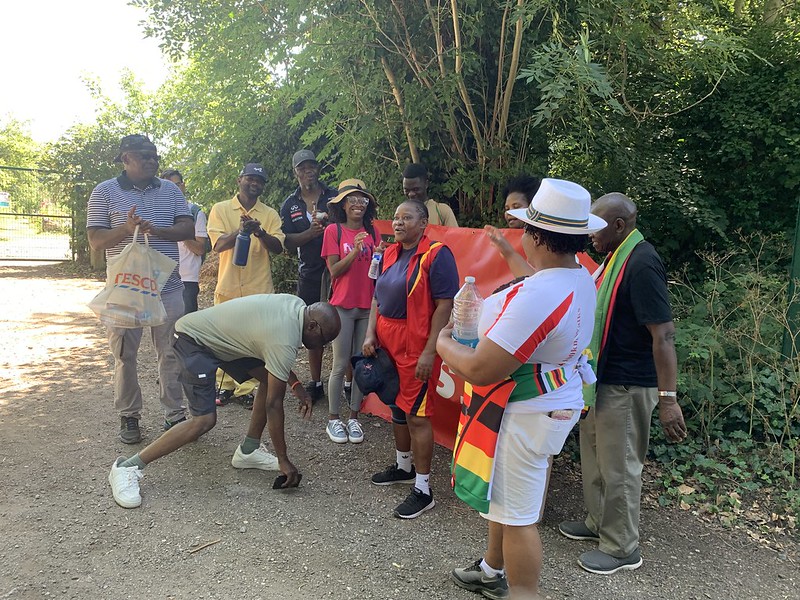 I'll search for information about the 2008 Zimbabwe elections and the documented cases of political violence during that period to help verify the context of these claims. {Image: taken from ZHRO Flickr Pro Account of the Leeds Walk for Freedom 12th July 2025 taken by John Burke, Founder of ZHRO}
Zimbabwe 2008 election violence MDC torture Zanu PF
10 results
- “Bullets for Each of You”: State-Sponsored Violence since Zimbabwe’s March 29 Elections | HRW hrw.org
- Zimbabwe: ZANU-PF Sets Up 'Torture Camps' hrw.org
- Learning and performing political violence: ZANU-PF Youth and the 2008 presidential run-off election in Zimbabwe: African Studies: Vol 79, No 4 tandfonline.com
- "Bullets for Each of You": State-Sponsored Violence since Zimbabwe’s March 29 Elections: IV. Background hrw.org
- 2008 Zimbabwean general election – Wikipedia wikipedia.org
- 2008 Human Rights Report: Zimbabwe state.gov
- Perpetual Fear: Impunity and Cycles of Violence in Zimbabwe | HRW hrw.org
- Zimbabwe - Elections, Aftermath, Politics | Britannica britannica.com
- (PDF) Learning and performing political violence: ZANU- PF Youth and the 2008 presidential run-off election in Zimbabwe academia.edu
- Amnesty International has documented unlawful killings, torture and other ill-treatment of human rights defenders in Zimbabwe following elections on March 29, 2008.
- amnestyusa.org
- Details
- Written by: John C Burke
- Category: ZEXIT
- Hits: 1286
 nehandaradio.com - 15th July 2025 - Zanu PF Leading Prepetration of Intimidation
{{Source: www.zimrights.org.zw However being blocked by Firewall}} Also (see below - in italics) reinforced by Human Rights Watch
In 2024, Zimbabwean authorities acted to undermine democratic processes, repressed civil society and restricted political pluralism. They continued to weaponize the criminal justice system against perceived critics and the political opposition. Impunity for the ruling party ZANU-PF violence, intimidation, harassment, and repression against opposition members and civil society activists restricted civic and political space.
The authorities failed to uphold the government’s domestic and international human rights obligations to respect peaceful activism.
Intensified Crackdown on Government Critics
Ahead of the August 17 Southern African Development Community (SADC) heads of state summit in Zimbabwe’s capital, Harare, the authorities intensified the crackdown on opposition members and civil society activists. Security forces arrested more than 160 people, including a religious leader, elected parliament and council officials, political activists, union leaders, students, and journalists.
Human Rights Watch
Nehandaradio Report
Zanu-PF identified as leading perpetrator of human rights violations in Zimbabwe
HARARE – The ruling Zanu-PF party has been identified as the leading perpetrator of human rights violations across Zimbabwe last year, according to a report released by the Zimbabwe Human Rights Association (ZimRights) on Tuesday.
The 2024 Annual Report, titled “RISING STILL: COMMUNITY RESILIENCE IN THE STRUGGLE FOR HUMAN RIGHTS IN ZIMBABWE,” has indicated that members of Zanu-PF were responsible for the highest number of documented human rights violations in 2024. According to the report, ZimRights documented 274 human rights violations affecting a total of 8,279 people in 2024. Of these, 4,457 were females and 3,822 were males.
- Details
- Written by: Thomas Machingauta
- Category: ZEXIT
- Hits: 1324
 The Barring of Auxillia Mnangagwa: A Diaspora Victory and the Weight of Symbolism
The recent announcement that Zimbabwean First Lady Auxillia Mnangagwa was barred from attending the FLAIR Summit in the United Kingdom, hailed by protesting diaspora groups as "Mission Accomplished," represents far more than a simple travel hiccup or diplomatic snub. It is a potent symbol of shifting dynamics in international engagement, the growing power of diaspora activism, and the inescapable weight of political baggage carried by representatives of contested regimes. This exclusion, secured through persistent protest, underscores a refusal to grant legitimacy on the global stage without accountability.
The FLAIR Summit, dedicated to fostering female leadership, inclusion, and sisterhood, presented an opportunity for Auxillia Mnangagwa to project an image of benevolent statesmanship and humanitarian concern - an image carefully cultivated through domestic philanthropic initiatives. Yet, for the Zimbabwean diaspora protesters who mobilized swiftly and effectively in the UK, this potential platform was anathema. They argued that her presence would be a profound contradiction to the summit's stated ideals. Their core contention rested on the First Lady's inextricable link to the regime of her husband, President Emmerson Mnangagwa, a regime consistently accused by international bodies, human rights organizations, and Zimbabwean citizens of systematic corruption, electoral manipulation, human rights abuses, and economic mismanagement that has plunged the nation into crisis.
The protesters' "mission" was clear: to prevent the whitewashing of this record. They leveraged allegations not just against the government broadly, but specifically highlighted controversies surrounding the First Lady herself. These included her perceived role in the extravagant lifestyle of the ruling elite amidst crippling national poverty, her alleged involvement in opaque business dealings (notably referenced in investigations like "Gold Mafia"), and her position as a beneficiary and symbol of a system protesters view as fundamentally predatory. Their strategy was multifaceted: vocal demonstrations outside potential venues, targeted lobbying of summit organizers, and appeals to UK authorities regarding the suitability of granting entry to such a figure.
The success of this campaign – the "accomplishment" – lies in its tangible outcome. While the precise mechanism (visa denial, disinvitation by organizers, or pressure-induced withdrawal) remains diplomatically opaque, the result is unambiguous: Mnangagwa will not attend. This outcome validates the protesters' core argument. It demonstrates that the international community, or at least specific actors within it, can be swayed by evidence of misgovernance and mobilized public pressure. It signifies that the carefully curated domestic image of a philanthropic First Lady can be pierced on the international stage by the harsh realities of her association with a deeply controversial administration.