 Parallels in Peril:
The Shared Struggles of Venezuela and Zimbabwe
In the wake of Nicolás Maduro's removal from power in Venezuela, voices from the Zimbabwean diaspora have drawn stark comparisons between the two nations, urging similar international action against Zimbabwe's President Emmerson Mnangagwa. Both countries, once promising economies bolstered by abundant natural resources, have descended into cycles of political instability, economic collapse, and human suffering.
This article explores the eerie similarities in their trajectories: rigged elections, eroded democratic institutions, systemic corruption, human rights atrocities, untapped mineral wealth, and the potential role of U.S. assistance in restoring stability to Zimbabwe.
Rigged and Stolen Elections:
A Pattern of FraudElection manipulation has been a hallmark of governance in both Venezuela and Zimbabwe, undermining public trust and perpetuating authoritarian rule. In Venezuela, the 2024 presidential election was marred by widespread fraud, with the National Electoral Council (CNE) declaring Maduro the winner without releasing disaggregated results or allowing independent verification. Opposition tallies showed Edmundo González Urrutia winning by a landslide, yet Maduro's regime suppressed evidence and resorted to repression. gjia.georgetown.edu Independent analyses, including those by the Associated Press and election forensics experts, confirmed the scale of the manipulation, labeling it a blatant theft of the people's will. gisreportsonline.com
Zimbabwe mirrors this with its 2023 elections, where President Mnangagwa secured a second term amid allegations of massive irregularities. The opposition Citizens' Coalition for Change (CCC) rejected the results, citing voter suppression, delayed polling, and intimidation by groups linked to the ruling ZANU-PF party. Regional observers from the Southern African Development Community noted these flaws, questioning the election's credibility.
Over the past three decades, Zimbabwe's elections have been consistently rigged, with Mnangagwa's administration continuing the legacy of Robert Mugabe's era, where fraud ensured ZANU-PF's dominance.
These parallels extend beyond isolated incidents; both regimes have disqualified opposition candidates, controlled electoral bodies, and used state machinery to skew outcomes, as seen in Venezuela's 2018 and 2020 polls and Zimbabwe's repeated post-election violence.
Lack of Viable Democratic Processes: Erosion of Institutions
Democratic institutions in both nations have been systematically dismantled, leaving little room for genuine political participation. Venezuela's slide into authoritarianism accelerated under Maduro, who sidelined the opposition-controlled National Assembly in 2017, rendering it powerless through Supreme Court rulings. The regime has banned major opposition parties, exiled leaders, and manipulated the CNE to ensure favorable results, creating a facade of democracy while consolidating power.
In Zimbabwe, the 2013 constitution promised reforms, but implementation has been selective. The military's interference in politics, evident in the 2017 coup that installed Mnangagwa, has blurred civilian oversight. Security forces routinely suppress opposition rallies, and the judiciary is compromised by executive influence. Civil society groups face restrictions, with NGOs labeled as foreign agents, echoing Venezuela's crackdown on dissent.
Both countries rank poorly on global indices; Venezuela is 177th on Transparency International's Corruption Perceptions Index, while Zimbabwe struggles with similar institutional decay.
Captured Administration and Wholesale Corruption: Enriching the Elite
Corruption in both administrations has captured state institutions, funneling public resources into private hands. In Venezuela, Maduro's regime has overseen unprecedented graft, with billions siphoned from state oil company PDVSA. Transparency International highlights how corruption has exacerbated economic collapse, leaving the populace in poverty while elites thrive.
Zimbabwe's situation is analogous, with Mnangagwa accused of amassing a personal fortune estimated at $10-50 billion through gold and diamond smuggling networks. U.S. Treasury sanctions in 2024 targeted him and associates for corruption involving mineral resources, labeling him the richest man in Zimbabwe amid widespread poverty.
The government loses over $1.8 billion annually to illicit financial flows, with cronies like Kudakwashe Tagwirei controlling key sectors. This "captured administration" mirrors Venezuela's, where corruption has led to humanitarian crises despite resource wealth.
Atrocities and Human Rights Violations: Repression as Policy
Human rights abuses have defined both regimes' responses to dissent. In Venezuela, post-2024 election protests were met with brutal force, resulting in 25 deaths and over 1,800 arbitrary detentions. The UN Fact-Finding Mission documented systematic persecution, torture, and extrajudicial killings by security forces like the Bolivarian National Guard.
Impunity prevails, with the ICC investigating crimes against humanity.
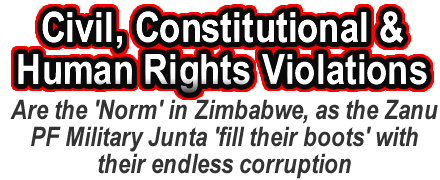
Zimbabwe's record is equally grim, with security forces implicated in killings, abductions, and torture. The 2018 post-election violence killed seven, and 2023 polls saw arbitrary arrests of activists and journalists. Amnesty International reports voter intimidation and gender-based violence, perpetuating a culture of fear.
Both nations have seen mass exodus due to these atrocities, with millions fleeing economic and political terror.
Valuable Mineral Wealth: Riches Amid Ruin
Despite their woes, both countries boast immense natural resources that could fuel prosperity if managed properly. Venezuela holds the world's largest oil reserves (303 billion barrels) and significant gas, gold, bauxite, and rare earth elements like coltan, valued at $1.36 trillion.
Mismanagement under Maduro has led to production collapses and smuggling ties with criminal networks.
Zimbabwe, Africa's largest lithium reserve holder and sixth globally, also produces platinum, chrome, gold, and diamonds. Reserves include 220,000 tons of lithium and billions in other minerals, potentially generating $12 billion annually.
Yet corruption and poor governance have stifled extraction, leading to economic stagnation and reliance on illicit trade.
The Case for U.S. Assistance:
Running Zimbabwe Toward Democracy
Given these parallels, calls for U.S. intervention in Zimbabwe echo those that preceded Maduro's ouster. Diaspora advocates argue that securing minerals, ending election rigging, and curbing corruption require external administration. The U.S. has historically sanctioned Zimbabwean elites under the Zimbabwe Democracy and Economic Recovery Act (ZDERA), aiming to promote reforms.
Proponents suggest a transitional U.S.-led administration could stabilize institutions, as in post-WWII models, fostering fair elections and economic recovery. Critics warn of sovereignty issues, but supporters point to Venezuela's turnaround as precedent.
Conclusion:
Lessons from Shared Crises
Venezuela and Zimbabwe's intertwined fates highlight how authoritarianism, corruption, and resource mismanagement can devastate nations. With Maduro gone, Zimbabwe's diaspora sees an opportunity for similar change under U.S. guidance to restore democracy and harness mineral wealth for the people. Whether this leads to intervention remains uncertain, but the parallels underscore the urgent need for accountable governance in both.