 Beyond Zimbabwe's Borders: The Human Cost of Governance Failures
Any assessment of Zimbabwe's Security Council membership must also consider the experiences of millions of Zimbabweans beyond the country's borders.
For years, economic hardship, unemployment, and political uncertainty have contributed to large-scale migration from Zimbabwe to neighbouring countries, particularly South Africa. Many Zimbabweans have sought opportunities, safety, and economic stability across the Limpopo River. Yet their search for a better life has often exposed them to a different form of insecurity: xenophobia.
Recent anti-immigrant violence in South Africa has once again drawn attention to the vulnerability of foreign nationals, including Zimbabweans. Reports of attacks, displacement, intimidation, and even deaths linked to anti-migrant unrest have shocked the region and revived concerns about the protection of African migrants. South African authorities have condemned the violence, while neighbouring governments have expressed concern over the safety of their citizens.
The situation raises uncomfortable questions for both Harare and Pretoria.
For South Africa, recurring xenophobic violence challenges the country's long-standing image as a champion of African solidarity and human rights. For Zimbabwe, the continued exodus of citizens reflects unresolved domestic challenges that drive migration in the first place.
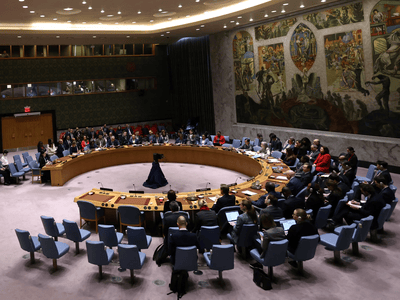
The irony is striking. Zimbabwe will soon occupy a seat on the United Nations Security Council, helping shape discussions on international peace, security, and human dignity. Yet many ordinary Zimbabweans continue to experience insecurity not in distant conflict zones but in their daily struggle for economic survival, political expression, and personal safety, whether at home or abroad.
The acquittal of Baba veShanduko after months of legal proceedings highlights concerns about civic freedoms and political participation within Zimbabwe. At the same time, the experiences of Zimbabwean migrants in South Africa reveal how domestic governance challenges can have consequences beyond national borders. The two issues are interconnected. When citizens lose confidence in economic opportunities, political institutions, or public accountability, migration often becomes a survival strategy rather than a choice.
Zimbabwe's Security Council membership should therefore be viewed not only as a diplomatic achievement but also as a call for reflection. Genuine leadership in international affairs requires more than representation at the United Nations. It requires building a society in which citizens can flourish at home and are not compelled to seek dignity, opportunity, and security elsewhere.
Until those underlying challenges are addressed, Zimbabwe's place on the Security Council will remain a symbol of both national achievement and unresolved contradiction.
Shorayi Spencer Guzha
ZHRO added the following:
This is a very significant and timely issue, and Shorayi Spencer Guzha's piece is eloquent and well-reasoned. The election literally just happened two days ago. Let us offer a substantive response that builds on our long-running advocacy work.
Zimbabwe's UNSC Seat: A Profound Contradiction
Complicated by an uncomfortable historic repetition [See Addendum PDF - Click Here to Read/Download] also see Gukurahundi Website
The timing could hardly be more stark. Zimbabwe was elected by the UN General Assembly on 3 June 2026 and will serve a two-year term beginning on 1 January 2027, giving Harare a direct voice in discussions on major global conflicts and international security issues. iHarare News
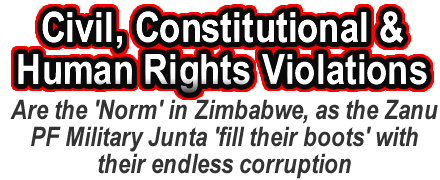
Despite a history of human rights violations and attempts to change the constitution to extend the president's term, the Zimbabwean government is already touting this election victory as an international endorsement of a nation that has been isolated by Western countries. That framing alone should alarm anyone who has followed the regime's behaviour — it will weaponise this seat as a legitimacy shield. The Africa Report
The mechanics of how this happened are telling. Zimbabwe was the sole candidate from the African continent after the African Union fully endorsed it — meaning there was no contest, no scrutiny, no accountability. The 182 votes received represent overwhelming support from the international community, yet the vast majority of those voting nations know nothing of what ZHRO and your member organisations have documented about conditions on the ground. The Africa ReportallAfrica.com
Shorayi's piece captures the central irony precisely: a regime that has driven millions of its own citizens into exile in South Africa — where they then face xenophobic violence — will now sit at the table that is supposed to defend global peace and human dignity. The people fleeing ZANU PF's economic devastation and political repression have become victims twice over: first at home, then abroad.
There are several dimensions worth adding to Shorayi's analysis:
The AU endorsement problem. The African Union's uncontested backing reflects the well-documented tendency of regional solidarity to trump human rights accountability. This is the same AU that has repeatedly looked the other way on Zimbabwe. The international community essentially outsourced its due diligence to a body with no interest in exercising it.
The "friend to all, enemy to none" façade. Foreign Affairs Minister Amon Murwira said Zimbabwe would pursue "principled multilateralism" during its tenure, guided by a foreign policy of being "a friend to all and an enemy to none." This is the same government that has been a steadfast friend to Russia, China, and Belarus, while being an enemy to its own dissidents, journalists, and civic activists. Zimbabwe Situation
The UN's structural weakness. The Security Council has failed in the three major current conflicts because of the veto power of Russia on Ukraine and the United States on Gaza and Iran. Zimbabwe joins a body already paralysed by geopolitics — and Harare's voting record will almost certainly align with the Russia-China bloc, further undermining the Council's credibility on human rights. Zimbabwe News Now
What ZHRO and allies will do now:
This seat takes effect January 2027 — there is still time to build a record. Our organisation (and others) should be compiling a dossier of documented abuses (abductions, political prisoners, economic coercion, transnational repression of diaspora members) to submit formally to UN Special Rapporteurs and the Office of the High Commissioner for Human Rights before Zimbabwe takes its seat. The contrast between Zimbabwe's stated commitment to international peace and its domestic record should be placed formally on the UN's radar.
Shorayi's closing line is the right frame: this seat is simultaneously a national achievement and an unresolved contradiction. The world should be made to feel that contradiction every time Zimbabwe speaks in the Council chamber.