- Details
- Written by: John C Burke
- Category: ZEXIT
- Hits: 527
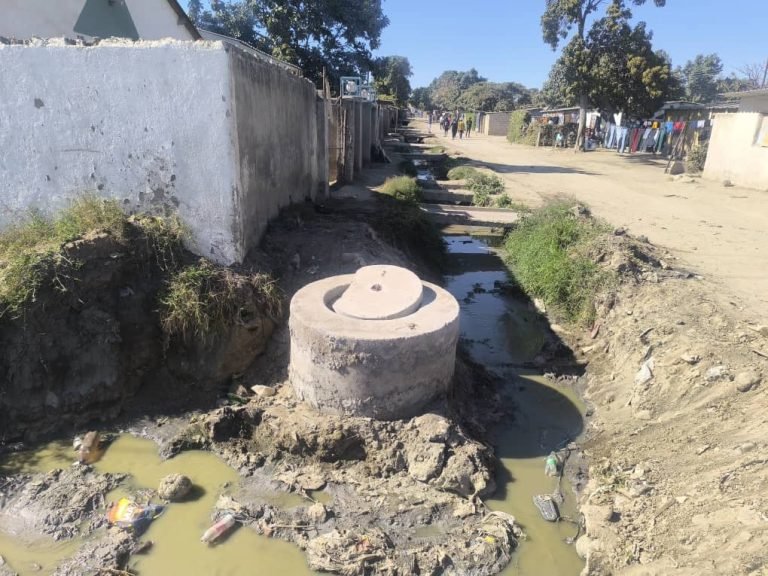 Harare's Broken Sewage System: A Public Health Crisis Rooted in Decades of Neglect
1. The Infrastructure: Built for a City That No Longer Exists
As ZHRO we have been acutely aware of this failed Infrastructure Issue for some time - we even posted a proposal to the then Foreign Office to sponsor a rebuilding project [November 2018] - specifically the Sewage System
The origins of Harare's sewage and water crisis lie in a fundamental mismatch between infrastructure age and population scale. The infrastructure for piped water in Harare was developed in the 1950s, before Zimbabwe's independence in 1980, and designed for a population of 300,000 people. Currently, Harare's greater metropolitan area has about 4.5 million people, more than half of whom have no access to clean water and are at risk of waterborne diseases such as cholera and typhoid. Human Rights Watch
For almost two decades after Zimbabwe's independence in 1980, Harare's water and sanitation infrastructure ran relatively smoothly. Human Rights Watch However, the piped infrastructure has not been maintained. The result of deterioration of the system combined with a significant increase in the population is that the water now runs only sporadically and is often contaminated. Human Rights Watch
- Details
- Written by: Shorayi Spencer Guzha
- Category: ZEXIT
- Hits: 542
 Defending Zimbabwe’s Constitution Is a Personal Duty
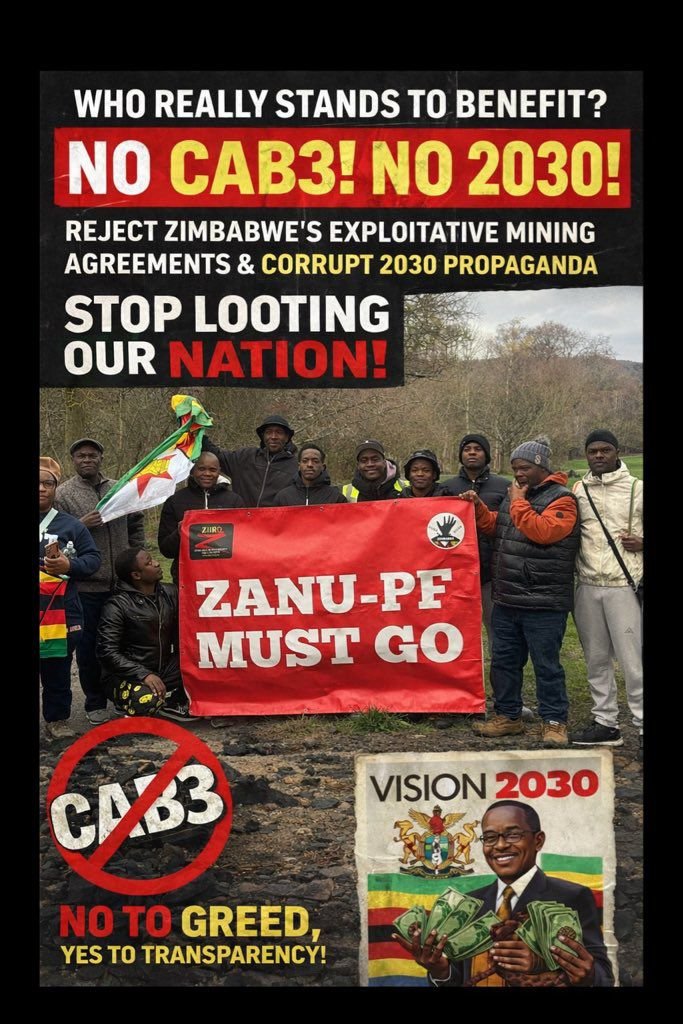
Defending Zimbabwe’s Constitution is not an abstract legal debate for me, it is a deeply personal obligation shaped by lived experience and the growing dangers faced by those who speak out. The Constitution, adopted in 2013 after extensive public consultation, was meant to protect citizens from the abuse of power, guarantee democratic renewal, and place clear limits on political authority. Today, those protections are under serious threat. The push commonly referred to as “Agenda 2030”, which seeks to extend the current president’s tenure beyond constitutionally prescribed limits, represents one of the most significant challenges to Zimbabwe’s democratic framework since independence. This agenda is not merely about development timelines or continuity; it is about weakening constitutional safeguards designed to prevent indefinite rule.
Zimbabwe’s Constitution is clear. The presidency is limited to two five-year terms. This provision was deliberately crafted to ensure accountability and peaceful transfers of power. Any attempt to extend a sitting president’s stay in office — whether by delaying elections, redefining term lengths, or manipulating amendment procedures — undermines both the letter and the spirit of the Constitution. As a citizen who has followed these debates closely, I am persuaded by constitutional lawyers and civic scholars who argue that changes affecting presidential tenure require broad public consent through a national referendum. Parliament alone cannot legitimately rewrite the people’s social contract to benefit those already in power. The Constitution belongs to Zimbabweans, not to a ruling elite.
- Details
- Written by: Rumbidzai Thelma Chidewu
- Category: Walk for Freedom
- Hits: 603
 Blackburn Walk for Freedom:
Zimbabweans in the UK Rise for Change
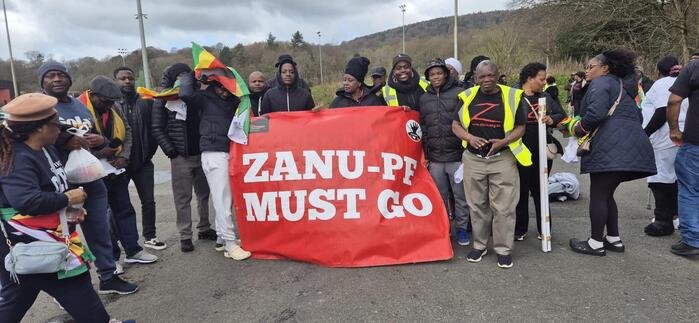
On 28 March 2026, the streets of Blackburn became a powerful symbol of resistance, unity, and hope as Zimbabweans from across the United Kingdom gathered for a Walk for Freedom. Travelling from different cities and counties, members of the Zimbabwean diaspora came together with one shared purpose: to stand in solidarity with those back home and to demand a better future for Zimbabwe.
This was more than just a march.
- It was a collective voice.
- A voice for justice.
- A voice for dignity.
- A voice for change.
Protesters called for the restoration of human rights, an end to political repression, and firmly rejected the “2030 agenda” and Constitutional Amendment Bill No. 3 (CAB3), which they say threatens to further weaken democratic processes in Zimbabwe.
“We Are Tired” — Voices from the Protest
 The most powerful moments of the march were carried not just in placards, but in the words and emotions of the people.
One protester summed up the frustrations felt by many:
“Taneta nekutongwa nemurume watisina kusarudza, taakudawo hurumende idzva ine ropa revechidiki.” (We are tired of being ruled by a man we did not choose; we now want a new government with young blood.)
This message resonated deeply throughout the crowd — reflecting a generation that feels excluded, unheard, and determined to reclaim its future. Many participants said they were marching not only for themselves, but for family members and fellow citizens in Zimbabwe who cannot freely protest without fear of intimidation or repression.
A Peaceful and People-Led Movement
Despite attempts to misrepresent the event, the Blackburn Walk for Freedom was peaceful, organized, and driven by ordinary Zimbabweans.
- There was no violence.
- No external control.
- No hidden agenda.
- Just people — united by concern for their country.
Participants dismissed claims suggesting the protest was sponsored or manipulated, describing such narratives as deliberate attempts to discredit genuine civic action.
“This was about us,” one marcher explained. “About our pain, our hope, and our demand for change.”
Challenging Disinformation
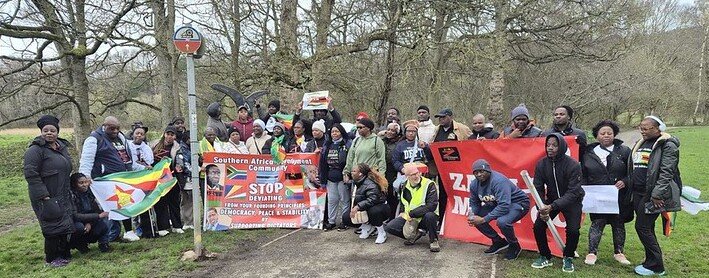 In the aftermath of the march, concerns have been raised over misinformation being circulated about the protest. Organizers and participants strongly refuted these claims, urging the public to question and
critically assess the narratives being spread. They emphasized that disinformation is often used to shift attention away from real issues — including economic hardship, governance concerns, and the shrinking democratic space in Zimbabwe.
“The real story is not the lies being told,” another participant said.
“The real story is why Zimbabweans felt the need to march.”
A Growing Call for Change
The Blackburn protest is part of a wider and growing movement among Zimbabweans in the diaspora who are increasingly using their voices to advocate for change. Far from home, they continue to stand for the values of freedom, accountability, and justice. The message from Blackburn was clear and undeniable:
- Zimbabweans are tired.
- Zimbabweans are united.
- Zimbabweans are ready for change.
And as the march came to an end, one truth remained — this was not just a moment.
It was a movement.
- Details
- Written by: Kelvin Mhlanga
- Category: ZEXIT
- Hits: 1568
 No to 2030:
Diaspora Protesters in Blackburn Challenge Zimbabwe’s Political Future
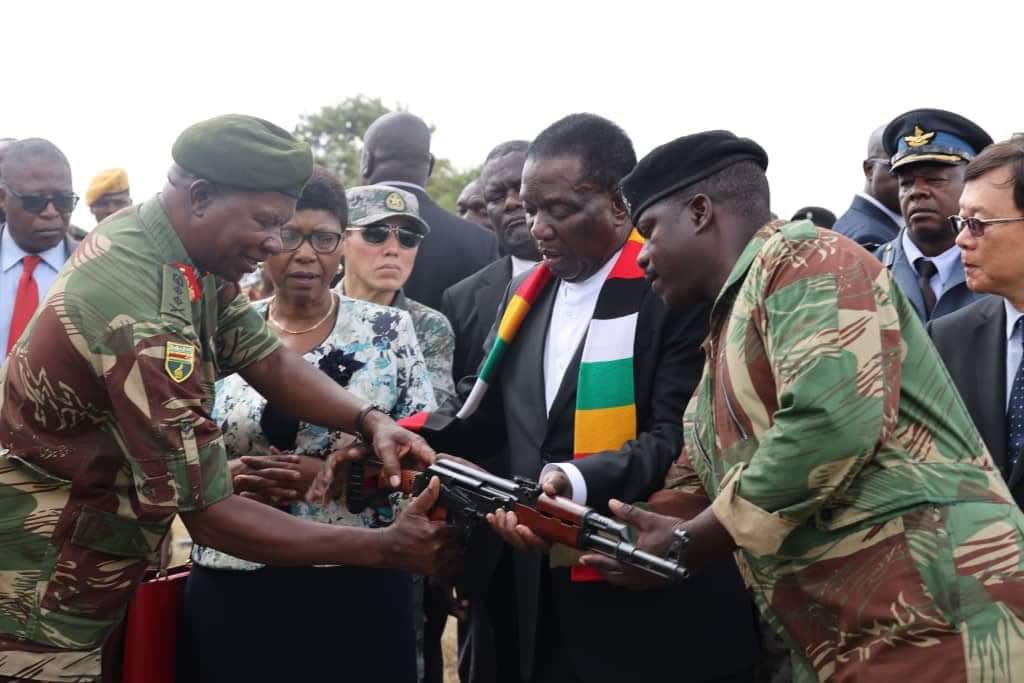
Saturday the 28th 2026 in Blackburn, Zimbabwean activists and allies gathered for a peaceful Walk for Freedom, united by growing concern over the political direction of Zimbabwe under Emmerson Mnangagwa and ZANU-PF. Though held in the United Kingdom, the message was clear: the struggle for democracy in Zimbabwe does not stop at its borders.
Zimbabwe remains a country where opposing the ruling party carries real risks. Reports of intimidation, arbitrary arrests, and the suppression of dissent continue to shape the political environment. For many, speaking out is no longer simply a right—it is a calculated risk.
Human rights organisations have also documented reported abductions of activists and opposition figures over several years. Victims are often taken by unidentified individuals, sometimes found injured, or in some cases not found at all. While authorities deny involvement, observers point to a recurring pattern, particularly during times of political tension. What has changed is visibility. With the rise of smartphones and social media, incidents that once went unnoticed are now being documented and shared widely. This raises an important question: how many cases occurred before this level of exposure existed?
A key concern raised during the walk was the proposed “2030 agenda,” which could allow Emmerson Mnangagwa to remain in power beyond constitutional limits. For many this represents a threat to democratic principles and accountability.
Participants rejected this direction clearly:
- No to 2030.
- No to extending power beyond the constitution.
The demonstration was peaceful but purposeful. It reflected a diaspora that remains deeply connected to the realities back home and unwilling to remain silent.
The message from Blackburn was simple:
- Zimbabwe’s future must be built on accountability,
- respect for constitutional limits,
- and the protection of fundamental freedoms.
Zimbabwe will be free—and no extension of power will silence that demand.
- Details
- Written by: Dickson Chikwizo
- Category: Walk for Freedom
- Hits: 522
 NO TO A CONSTITUTIONAL COUP ON ZANU PF'S ED 2030 AGENDA.
Zimbabwe's ruling Zanu PF party is actively organising nationwide campaigns to support the contentious Constitutional Amendment (No.3), which extends President Emmerson Mnangagwa’s term beyond 2028 to 2030 under the slogan "ED2030".
As activists and opposition organisations we describe it as a "constitutional coup" to keep the 84-year-old leader in power. Our WALK FOR FREEDOM Campain in Blackburn, Lancashire, UK on the 28th March 2026 is against this amendment. If there is a need to amend the Constitution, the government should call for a referendum and seek people's mandate.
The ZANU PF regime is trying something using an open ringing, without a procedural voting in a referendum. We do remember from a military coup in the year 2017 to this year's Constitutinal coup on our Constitunal amendment (No3) which they're seeking to extend.
We condemn the brutal torture of Professor Madhuku, the President of NCA and some of his party members who were brutally assaulted for opposing the Constitution amendment (Bill No3) on the 1st March 2026, and the CDF Convener Tendai Biti and his team who were arrested on the 21st March 2026 for opposing the amendment as well.
They're all being persecuted for opposing the Constitution amendment of the Bill (No3). This is a destabilising gamble. The ZANU PF regime’s agenda ED 2030 has been weaponised. Zimbabwe is not governed by a democratic rights but by patronage and stolen wealth, while citizens are suffering.
The reality in the ZANU PF regime is simply that they feel entitled to rule Zimbabweans for ever, by virtue of having fought the liberation struggle.
We are not going to stop Walking For Freedom until Zimbabwe is Free! Hope is keeping us walking when everything around our fighting is yet archived. Hope is our resilient spirit in refusing to surrender our WALK!!
WE ARE UNSTOPPABLE!!
Page 3 of 19