 PART TWO: THE CURRENT CONSTITUTIONAL CRISIS — CAB3
2.1 The 2013 Constitution: A Hard-Won Social Contract
The Constitution of Zimbabwe (2013) was the product of a lengthy and genuinely participatory process — the Constitutional Parliamentary Select Committee (COPAC) — in which Zimbabweans at home and in the diaspora engaged extensively. It represented the most democratic constitutional settlement Zimbabwe had ever achieved, enshrining direct popular election of the President, fixed five-year terms, a two-term limit, an independent Electoral Commission, separation of powers, and a comprehensive Bill of Rights.
Constitutional scholars and democratic governance experts regarded the 2013 Constitution as a genuine foundation upon which Zimbabwe could build a democratic future. The diaspora, including the petitioners, invested hope, time, and advocacy in its entrenchment. That investment is now under direct and deliberate attack.
2.2 Constitutional Amendment (No. 3) Bill 2026 (CAB3): A Constitutional Coup
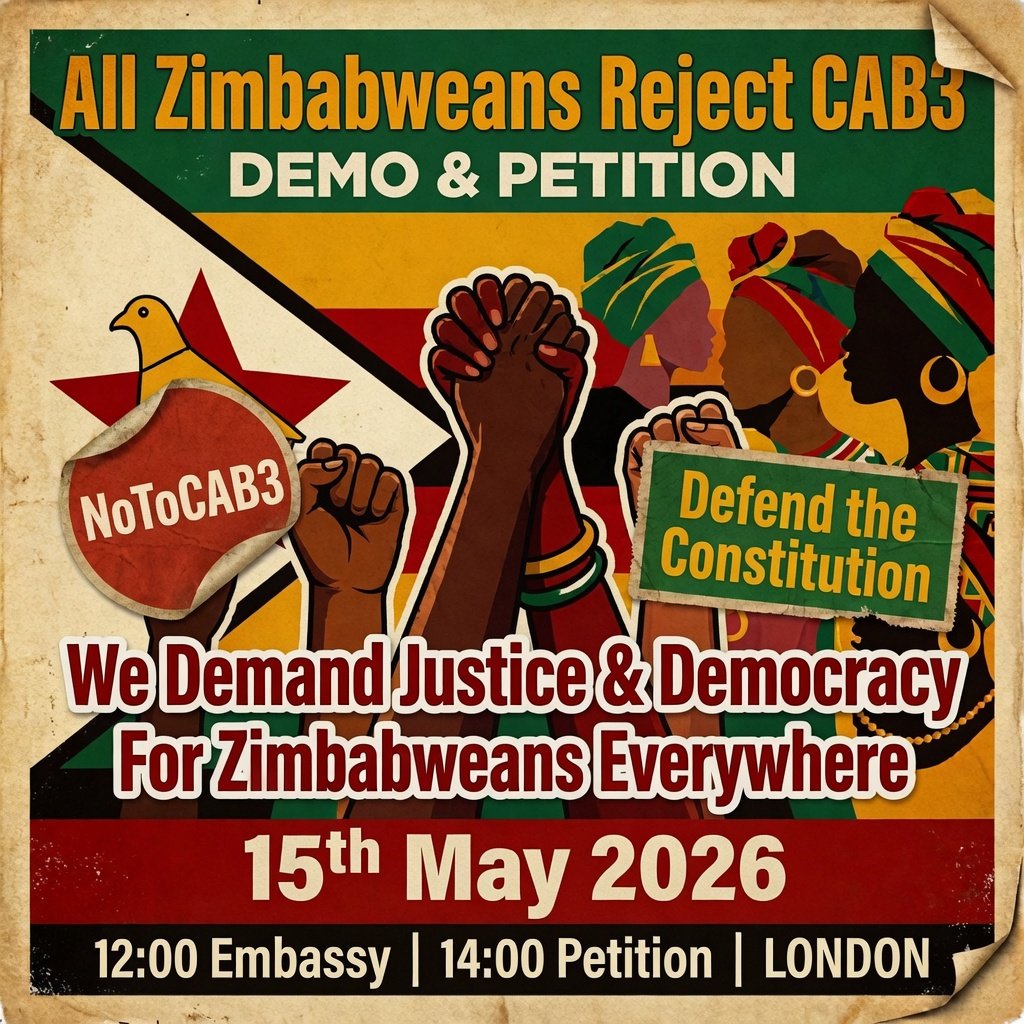
The Constitutional Amendment (No. 3) Bill 2026, introduced by the ZANU PF government under the slogan “ED2030,” seeks to fundamentally restructure Zimbabwe’s constitutional order in ways that serve exclusively the interests of the incumbent executive. ZHRO, the legal profession, civic society, church leaders, and constitutional scholars have collectively described it as a “constitutional coup.”
|
What CAB3 Does to Zimbabwe’s Constitution |
|
→ REMOVES citizens’ direct right to elect the President — replacing universal adult suffrage with parliamentary selection by a legislature whose legitimacy is itself contested; |
|
→ RETROSPECTIVELY extends the presidential and parliamentary term from five to seven years — prolonging the current President’s tenure until 2030 without a fresh mandate from the people; |
|
→ TRANSFERS voter registration from the independent Zimbabwe Electoral Commission to the Registrar-General — a body under direct executive control; |
|
→ CREATES a new Electoral Delimitation Commission whose chairperson and all members are appointed directly by the President; |
|
→ EXPANDS the Senate by ten additional seats, all filled by direct presidential appointment; |
|
→ BREACHES Section 328(7) of the 2013 Constitution, which explicitly prohibits amendments that extend the term of a sitting President — by inserting retrospective provisions that purport to override this protection. |
The cumulative effect of these provisions is to dismantle every meaningful check on executive power that the 2013 Constitution erected. They represent not reform but regression — not modernisation but the architecture of permanent rule.
CAB3 is also inconsistent with Zimbabwe’s obligations under Article 25 of the International Covenant on Civil and Political Rights (ICCPR), which guarantees the right to genuine periodic elections by universal and equal suffrage, and under the African Charter on Democracy, Elections and Governance, which Zimbabwe has ratified.
2.3 A Flawed and Manipulated Consultation Process
The Zimbabwean government has claimed that a 90-day public consultation process is underway. ZHRO and our partner organisations reject this claim as a facade. Across Zimbabwe, credible reports document:
- ZANU PF officials and traditional leaders coercing citizens to attend “consultation” meetings as demonstrations of support, not genuine participation;
- Opposition figures, civic educators and lawyers being arrested for attempting to provide independent information about CAB3 to communities;
- Public hearings being dominated by party loyalists while ordinary citizens are denied meaningful access;
- State media providing blanket pro-CAB3 coverage while independent voices are suppressed.
A consultation process conducted under conditions of intimidation, in a media environment controlled by the ruling party, with opposition voices silenced by arrest and violence, is not a legitimate consultation. It is theatre.