 Zimbabwe’s CAB3: why a petition at Downing Street matters
LONDON, 21 April 2026
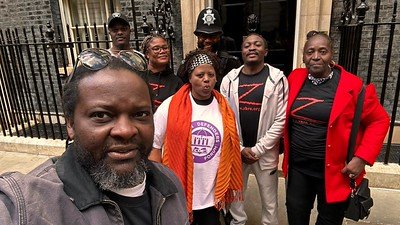
Zimbabwean activists gathered outside 10 Downing Street this week to witness the handover of a petition opposing the Constitution Amendment Bill No. 3 (CAB3), a proposal by Emmerson Mnangagwa widely criticised as a threat to democratic governance in Zimbabwe. Although I was not physically present, as a Zimbabwean human rights activist I recognise the significance of that moment. It reflects a growing concern among Zimbabweans, both at home and in the diaspora, about the direction of constitutional reform.
A diaspora stepping into the space
The petition, organised by the Zimbabwe Human Rights Organisation (ZHRO) under John Burke, represents a coordinated effort by Zimbabweans in the United Kingdom to challenge what they view as a dangerous constitutional shift. It took organisers four weeks of persistence to reach the doors of 10 Downing Street, an indication of both the determination behind the campaign and the realities of engaging even within established democratic systems.
Importantly, this petition forms part of a broader, sustained strategy. Prior to this, submissions were made in response to CAB3 through detailed technical arguments, alongside proposals for an updated constitutional framework. Taken together, these efforts reflect a long-term approach to activism, one that combines advocacy, legal analysis and institutional engagement. For many in the diaspora, such action has become a necessity. There is a widely held view that diaspora voices help amplify concerns that cannot always be expressed freely within Zimbabwe itself.
As activists, we are acutely aware that we speak for our sisters and brothers in Zimbabwe who are unable to do so openly due to fear of being targeted by the state. The risks of arrest, harassment, violence or worse, remain real.
The petition and its authors
The petition submitted at Downing Street was supported by a group of individuals:
- John Burke (Organiser only)
- Charles Kanyimo
- Phylis Melody Magejo
- Elizabeth Chitengo
- Genius Khatazile Mamwadhu
- Josephine Sipiwe Jenje-Mudimbu
- Kelvin Thembinkosi Mhlanga
The document itself is a comprehensive and fully referenced critique, setting out detailed arguments as to why CAB3 is considered fundamentally undemocratic.
It is publicly available, including the full written submission, at:
zhro.org.uk - 21st April 2026 petition delivered
Foundations of the argument
The petition draws on multiple sources and perspectives. It was inspired in part by a statement made by Henry Makambe to John Burke on 13 April 2026, which is included within the submission.
It also features a foreword by Tendai Biti, adding political and constitutional context to its legal arguments.
Supporters say this combination of contributions strengthens the document’s position as a serious and evidence-based intervention in the debate.
The constitutional debate
At the centre of the controversy is the scope of CAB3 and its implications for Zimbabwe’s governance.
Critics point to several key provisions:
- The removal of direct presidential elections in favour of parliamentary selection
- The extension of presidential terms from five to seven years
- Increased executive influence over institutions designed to provide oversight
- Concerns over adherence to constitutional safeguards, including the requirement for referendums
Supporters of reform argue that constitutional amendments are a sovereign matter. However, opponents maintain that these proposals risk concentrating power and weakening democratic accountability.
Human rights concerns in context
The debate over CAB3 is taking place against a broader backdrop of human rights concerns.
Activists and observers have raised issues including arbitrary arrests, detention without due process, allegations of torture, and cases of enforced disappearance.
The experiences of individuals such as Godfrey Karembera and Blessed Dhara Mhlanga are often cited as examples of the risks faced by those who speak out.
Within this context, critics argue that constitutional safeguards are not merely technical provisions but essential protections, particularly where institutional trust is fragile.
Why London matters
The decision to deliver the petition in London highlights the increasingly international dimension of Zimbabwe’s constitutional debate.
Campaigners hope that raising the issue in the United Kingdom will encourage wider scrutiny and engagement. Diplomatic channels, including the Embassy of Zimbabwe, remain central to how such concerns are addressed.
Media coverage, including live reporting by prominent Twitter channel Change Radio (@changeradiozw), has also helped bring visibility to the event beyond those present.
An ongoing conversation
The petition handover is unlikely to be decisive in itself. Rather, it forms part of a broader and continuing conversation about governance, accountability and the future of Zimbabwe. As a Zimbabwean human rights activist, I see CAB3 not simply as a legal proposal, but as a moment that raises fundamental questions about how power is exercised and constrained.
In a climate where many fear speaking out, diaspora activism plays a critical role in ensuring that these issues remain visible. The message from 10 Downing Street is clear: Zimbabweans wherever they are will continue to advocate for a constitutional order that protects the people, upholds accountability and preserves democratic rights.
The gathering in London may have been brief, but the debate it reflects is far from over.