- Details
- Written by: Shorayi Spencer Guzha
- Category: ZEXIT
- Hits: 11
 Defending Zimbabwe’s Constitution Is a Personal Duty
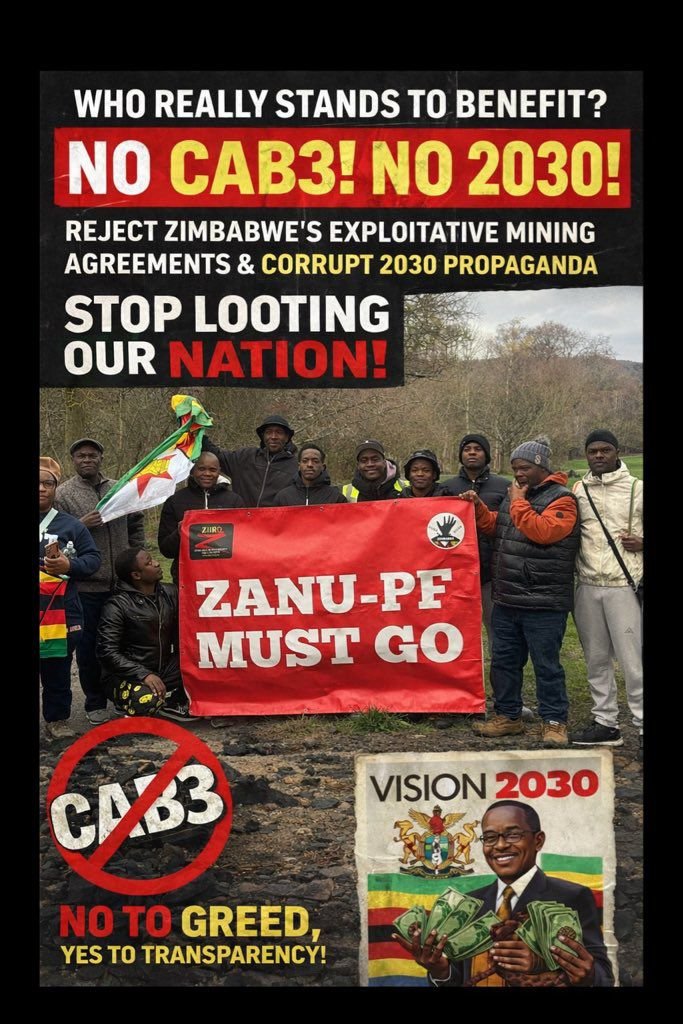
Defending Zimbabwe’s Constitution is not an abstract legal debate for me, it is a deeply personal obligation shaped by lived experience and the growing dangers faced by those who speak out. The Constitution, adopted in 2013 after extensive public consultation, was meant to protect citizens from the abuse of power, guarantee democratic renewal, and place clear limits on political authority. Today, those protections are under serious threat. The push commonly referred to as “Agenda 2030”, which seeks to extend the current president’s tenure beyond constitutionally prescribed limits, represents one of the most significant challenges to Zimbabwe’s democratic framework since independence. This agenda is not merely about development timelines or continuity; it is about weakening constitutional safeguards designed to prevent indefinite rule.
Zimbabwe’s Constitution is clear. The presidency is limited to two five-year terms. This provision was deliberately crafted to ensure accountability and peaceful transfers of power. Any attempt to extend a sitting president’s stay in office — whether by delaying elections, redefining term lengths, or manipulating amendment procedures — undermines both the letter and the spirit of the Constitution. As a citizen who has followed these debates closely, I am persuaded by constitutional lawyers and civic scholars who argue that changes affecting presidential tenure require broad public consent through a national referendum. Parliament alone cannot legitimately rewrite the people’s social contract to benefit those already in power. The Constitution belongs to Zimbabweans, not to a ruling elite.
- Details
- Written by: Kelvin Mhlanga
- Category: ZEXIT
- Hits: 708
 No to 2030:
Diaspora Protesters in Blackburn Challenge Zimbabwe’s Political Future
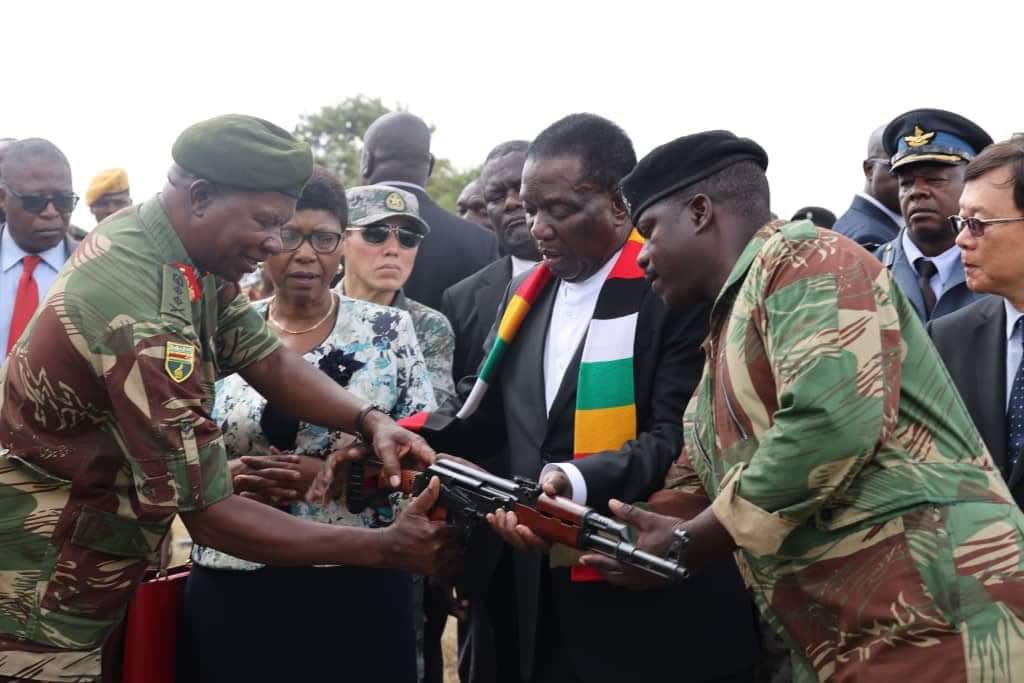
Saturday the 28th 2026 in Blackburn, Zimbabwean activists and allies gathered for a peaceful Walk for Freedom, united by growing concern over the political direction of Zimbabwe under Emmerson Mnangagwa and ZANU-PF. Though held in the United Kingdom, the message was clear: the struggle for democracy in Zimbabwe does not stop at its borders.
Zimbabwe remains a country where opposing the ruling party carries real risks. Reports of intimidation, arbitrary arrests, and the suppression of dissent continue to shape the political environment. For many, speaking out is no longer simply a right—it is a calculated risk.
Human rights organisations have also documented reported abductions of activists and opposition figures over several years. Victims are often taken by unidentified individuals, sometimes found injured, or in some cases not found at all. While authorities deny involvement, observers point to a recurring pattern, particularly during times of political tension. What has changed is visibility. With the rise of smartphones and social media, incidents that once went unnoticed are now being documented and shared widely. This raises an important question: how many cases occurred before this level of exposure existed?
A key concern raised during the walk was the proposed “2030 agenda,” which could allow Emmerson Mnangagwa to remain in power beyond constitutional limits. For many this represents a threat to democratic principles and accountability.
Participants rejected this direction clearly:
- No to 2030.
- No to extending power beyond the constitution.
The demonstration was peaceful but purposeful. It reflected a diaspora that remains deeply connected to the realities back home and unwilling to remain silent.
The message from Blackburn was simple:
- Zimbabwe’s future must be built on accountability,
- respect for constitutional limits,
- and the protection of fundamental freedoms.
Zimbabwe will be free—and no extension of power will silence that demand.
- Details
- Written by: Rumbidzai Thelma Chidewu
- Category: ZEXIT
- Hits: 272
 Madzibaba VeShanduko: The Man Behind Zimbabwe’s Grassroots Call for Change
Symbol of Activism in Zimbabwe
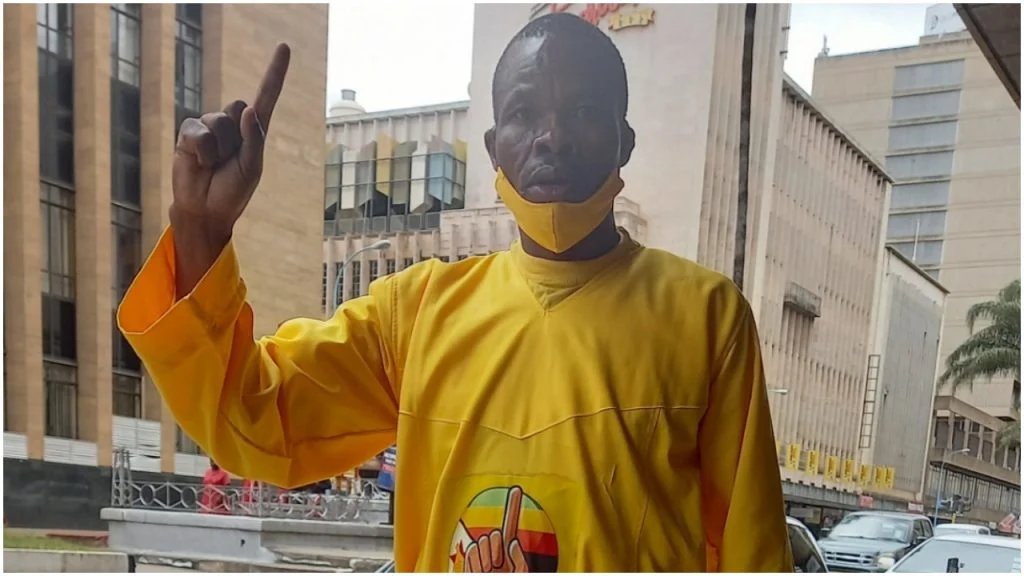
In Zimbabwe’s often tense political landscape, grassroots activists have frequently emerged as powerful voices calling for reform and accountability. Among the most recognizable of these figures is Godfrey Karembira, popularly known as Madzibaba VeShanduko.
Karembira has become widely known for his outspoken political activism and his support for opposition politics in Zimbabwe. His nickname, “VeShanduko,” carries a strong political message. In the Shona language, shanduko means “change,” a word that reflects the central theme of his activism and his call for political transformation in the country. Often dressed in distinctive white or yellow robes associated with Apostolic religious sects, Karembira has developed a unique public image that makes him easily recognizable during protests and public demonstrations.
A Voice for Political Reform
Madzibaba VeShanduko has been closely associated with the Citizens Coalition for Change (CCC), an opposition political movement that challenges the long‑ruling ZANU‑PF party. Through public demonstrations, street activism, and grassroots mobilization, Karembira has consistently encouraged citizens to demand greater accountability from political leaders. Supporters describe him as a
determined activist who connects with ordinary people in communities where economic hardship and political frustration remain widespread. Rather than holding a formal political office, he has built his influence through direct engagement with citizens, particularly in urban areas where opposition politics often finds strong support.
Confrontations with Authorities
Karembira’s activism has not been without controversy. Over the years, he has reportedly faced several arrests and confrontations with law enforcement authorities due to his participation in protests and demonstrations. One of the most widely reported incidents occurred in March 2022 in Harare, when Karembira was allegedly assaulted by police officers during a protest while wearing yellow clothing associated with opposition supporters. The incident drew widespread attention on social media and in political discussions, raising concerns among activists about the treatment of opposition supporters and political demonstrators.
Read more: The Man Behind Zimbabwe’s Grassroots Call for Change
- Details
- Written by: Chipo Musarurwa Siziba @ChipoMusarurwaS
- Category: ZEXIT
- Hits: 377
 Digital Services Tax
As taken from X/Twitter x.com/ChipoMusarurwaS Image by TAKBATANA [Click on Image for a larger version - opens in a new window]
The recent introduction of the Digital Services Tax is not just another levy it is an act of economic aggression against a population already stretched to its limits.
But while this new tax has rightly sparked outrage, it is merely the tip of the iceberg. Everything is going up this year. Why? Because the government has quietly increased the Value Added Tax (VAT) to 15.5%.
This isn’t just a number on a spreadsheet it’s a direct hit to every household’s budget. It means:
- School fees will rise, making education even more inaccessible for struggling families.
- Groceries will cost more, forcing parents to choose between meals and rent.
- Fuel and transport will spike, driving up the price of everything else.
- Electricity, mobile data, gym subscriptions, clothing, medicine nothing is spared.
This is not fiscal policy. It is extortion masquerading as governance. A Government That Takes and Takes
What do we get in return for these taxes? Crumbling roads. Empty hospitals. Underpaid teachers. Power cuts. Water shortages. A currency in freefall.
A government that taxes so much yet delivers so little is not just inefficient it is indifferent. It is a government that has lost its moral compass, prioritizing revenue collection over public service.
- Details
- Written by: John C Burke
- Category: ZEXIT
- Hits: 390
 Parallels in Peril:
The Shared Struggles of Venezuela and Zimbabwe
In the wake of Nicolás Maduro's removal from power in Venezuela, voices from the Zimbabwean diaspora have drawn stark comparisons between the two nations, urging similar international action against Zimbabwe's President Emmerson Mnangagwa. Both countries, once promising economies bolstered by abundant natural resources, have descended into cycles of political instability, economic collapse, and human suffering.
This article explores the eerie similarities in their trajectories: rigged elections, eroded democratic institutions, systemic corruption, human rights atrocities, untapped mineral wealth, and the potential role of U.S. assistance in restoring stability to Zimbabwe.
Rigged and Stolen Elections:
A Pattern of FraudElection manipulation has been a hallmark of governance in both Venezuela and Zimbabwe, undermining public trust and perpetuating authoritarian rule. In Venezuela, the 2024 presidential election was marred by widespread fraud, with the National Electoral Council (CNE) declaring Maduro the winner without releasing disaggregated results or allowing independent verification. Opposition tallies showed Edmundo González Urrutia winning by a landslide, yet Maduro's regime suppressed evidence and resorted to repression. gjia.georgetown.edu Independent analyses, including those by the Associated Press and election forensics experts, confirmed the scale of the manipulation, labeling it a blatant theft of the people's will. gisreportsonline.com
Zimbabwe mirrors this with its 2023 elections, where President Mnangagwa secured a second term amid allegations of massive irregularities. The opposition Citizens' Coalition for Change (CCC) rejected the results, citing voter suppression, delayed polling, and intimidation by groups linked to the ruling ZANU-PF party. Regional observers from the Southern African Development Community noted these flaws, questioning the election's credibility.