 Harare's Broken Sewage System: A Public Health Crisis Rooted in Decades of Neglect
1. The Infrastructure: Built for a City That No Longer Exists
As ZHRO we have been acutely aware of this failed Infrastructure Issue for some time - we even posted a proposal to the then Foreign Office to sponsor a rebuilding project [November 2018] - specifically the Sewage System
The origins of Harare's sewage and water crisis lie in a fundamental mismatch between infrastructure age and population scale. The infrastructure for piped water in Harare was developed in the 1950s, before Zimbabwe's independence in 1980, and designed for a population of 300,000 people. Currently, Harare's greater metropolitan area has about 4.5 million people, more than half of whom have no access to clean water and are at risk of waterborne diseases such as cholera and typhoid. Human Rights Watch
For almost two decades after Zimbabwe's independence in 1980, Harare's water and sanitation infrastructure ran relatively smoothly. Human Rights Watch However, the piped infrastructure has not been maintained. The result of deterioration of the system combined with a significant increase in the population is that the water now runs only sporadically and is often contaminated. Human Rights Watch
More than 40 percent of pumped treated water is not delivered due to leakages. There are cracks in both the water and sewage pipes because of the city's failure to replace decades-old pipes several years ago, causing flowing tap water to be mixed with sewage in several places across Harare. Human Rights Watch
2. The Post-Independence Governance Failure (1980–Present)
A landmark scholarly analysis published in Daedalus (MIT Press, 2021) situates the crisis within a long arc of political failure. The postcolonial government failed to change the colonial patterns of urban water distribution and did little to increase water supplies to keep pace with a swiftly growing urban population. The city's water infrastructure has progressively deteriorated, resulting in rampant water shortages and poor water quality, inducing deleterious epidemiological consequences, such as the 2008 and 2018 cholera outbreaks. Since the early 2000s, reports with headlines such as "Typhoid Spreads amid Water Shortage" or "Zimbabwe: Untreated Sewage Makes Its Way into Drinking Water" have been common. MIT Press
While the Zimbabwean government was never found wanting when it came to making commitments to several national and international organizations on improving water and sanitation access for its citizens, four decades after independence, the inherited unequal distribution patterns of water and sanitation remain deeply entrenched among residents of Harare. MIT Press
A peer-reviewed paper in the Journal of Developing Societies (Musemwa, 2010) describes the mutation of Harare from what was once regarded as one of the most developed post-colonial cities in Africa — dubbed the "sunshine city" in local parlance in the 1980s — to a landscape of crisis and disease. The article emphasizes that postcolonial Harare's dysfunctional water systems have been worsened by rapid urban population growth and repressive forms of political interventions in city governance. Sage Journals
The politicisation of water was explicitly weaponised. A peer-reviewed study in PMC (2017) found that ZANU-PF's loss of municipal elections in 2005 led party leaders to refuse to fund municipal budgets for cities where it had been defeated, including in Harare. These retaliatory cuts led to a cessation of water purification for the city and, eventually, the redirection of raw human sewage into the city's main reservoir. PubMed Central
Furthermore, in nationalizing water services, ZANU-PF claimed to be taking a step toward relieving Zimbabweans of "persistent water woes." Instead, it raised water rates for residents while simultaneously neglecting infrastructure and diverting revenue to military and security forces. This predictably led to widespread service disruptions, resident discontent, and waterborne disease, particularly in and around Harare. PubMed Central
A 2025 study published in the International Journal of Research and Innovation in Social Science found that after Zimbabwe's independence in 1980, big families started to move into small bachelors' rooms, with about six to eight people sharing one room, and this put a strain on the water and sewage infrastructure, which explains why sewer pipe bursts are rampant in these areas. The aging and inadequate sanitation infrastructure is a challenge that local authorities need to address, as lack of maintenance due to limited budgets impedes city councils from maintaining and upgrading sanitation infrastructure in these older areas. RSIS International
3. Sewage Contaminating Drinking Water
Human Rights Watch's 2013 report Troubled Water documents in stark detail how the collapsed sewage system bleeds directly into the water supply. Old, unmaintained pipes and leaks in both the water and sewage system mean that tap water that does flow can be mixed with sewage. Several residents told Human Rights Watch that adults and children were drinking the tap water even when it smelled bad and they believed it caused diarrhea. Human Rights Watch
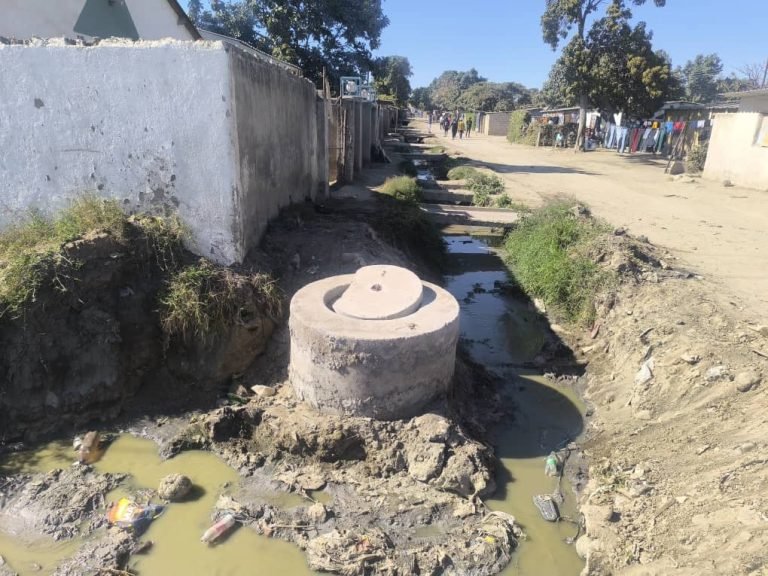
The pressure on the dilapidated sewage infrastructure from the use of home toilets contributes to the burst pipes that result in sewage flowing openly on the streets. Human Rights Watch A resident of Mufakose quoted in the Daedalus study described the lived reality: "We're used to flowing sewage, it happens so often. I often see kids playing in the sewage... Raw sewage is not meant to be seen." MIT Press
By 2007, the contamination had reached Harare's primary water supply. The dumping of untreated sewage into Lake Chivero, the main water supply dam of the Zimbabwean capital, had finally caught up with authorities. People were drinking unsafe water from shallow boreholes, and did not have enough water to wash vegetables or plates, creating a breeding ground for waterborne diseases. ReliefWeb
4. The 2008–2009 Cholera Catastrophe
The cumulative neglect of the sewage system produced the worst cholera outbreak in Zimbabwe's recorded history. The 2008 Zimbabwean cholera outbreak was an epidemic affecting much of Zimbabwe from August 2008 until June 2009. In total, 98,596 cases of cholera and 4,369 deaths were reported, making this the largest outbreak of cholera ever recorded in Zimbabwe. Wikipedia
Epidemiologically, the outbreak can be explained by the breakdown and cross-contamination of the city's water and sanitation systems. Oxford Department of International Development The PMC review confirms that environmental contamination of water sources and breakdown of the sanitation system contributed to the spread of cholera throughout the country. Contamination of water sources by sewage from broken pipes and use of this water by the community was consistently observed. PubMed Central
By early December 2008, people had to rely on unclean water as stocks of government-provided water-purification chemicals had run out, whereas the sanitary conditions declined in many affected areas, mostly in Harare urban, where the dilapidated sewage systems caused environmental contamination by raw sewage, particularly in streets and rivers. ClinMed Journals
Amnesty International later noted that in 2008, the government's failure to contain and manage the cholera outbreak was caused by the lack of a safe drinking water supply and broken-down sanitation systems that left residents surrounded by flowing raw sewage. Yet a decade later, the same failures caused the 2018 outbreak. Amnesty International
5. Recurring Typhoid Outbreaks: The Sewer–Borehole Contamination Cycle
Because municipal water is unreliable, residents depend on boreholes — but broken sewer lines contaminate those too, fuelling chronic typhoid outbreaks.
A CDC report published in the MMWR (2018) on the 2016–2017 Harare typhoid outbreak found that assessments of affected suburbs identified 120 broken sewer lines and overcrowded apartment blocks with limited access to sanitary facilities. Of 32 boreholes in Mbare suburb, 18 (56%) were tested; 13 (72%) of those were contaminated with fecal coliform bacteria. Mapping indicated that cases were clustered around contaminated boreholes. CDCnih
HCHD reported 860 cases with illness onset from October 2016 through March 2017, including 780 suspected cases, 80 confirmed cases, and four deaths. CDC Worryingly, antimicrobial resistance was emerging: 45 (61%) of isolates were susceptible to ciprofloxacin, while 18 (25%) were resistant — with resistant isolates rising sharply in the latter months of the outbreak. CDC
The pattern repeated almost immediately. A 2017–2018 outbreak documented in a second MMWR report found that as of February 24, 2018, the city health department had identified a total of 3,187 suspected cases, with previous typhoid outbreaks in Harare having been consistently associated with municipal water shortages and increased use of contaminated boreholes and shallow wells. CDC
The specific trigger in Mbare was identified precisely: burst sewer pipes flowing from Matapi flats were believed to have caused contamination of nearby boreholes — the main sources of potable water. The Mbare Flats, initially designed to accommodate about 2,000 residents, currently house over 23,000 people. Outbreak News Today
6. Geospatial Research: Maintenance Is the Key Variable
A 2023 study published in PLOS Neglected Tropical Diseases used geo-spatial modelling to study the 2018 cholera outbreak in Harare and reached a clear conclusion about root causes. When sewer bursts or leakages are not properly addressed, liquid sewage can potentially be even more hazardous than waste from onsite sanitation facilities. nih The study's key policy finding was unambiguous: this analysis shows the importance of emphasizing maintenance above and beyond new construction, especially when thinking of extending an already poorly maintained system. PLOS
A 2023 systems analysis published in Taylor & Francis found that the proximity of communal boreholes and sewerage tanks aggravates public health risks, as demonstrated by rampant, repeated cholera outbreaks. The postcolonial government has not altered these inherited inequitable patterns of urban water distribution and use, and over the past five years, access to good sanitation services has been worsening. Taylor & Francis Online
7. Human Rights Dimensions and Ongoing Risks
Human Rights Watch's 2021 report warned that Harare's long unresolved water crisis is a ticking time bomb of magnified health risks that forces residents to seek alternative, often unsafe water sources. The water crisis in Harare has affected people's rights to water and sanitation as well as other related rights, including the rights to life, food, and health. Human Rights Watch
Despite section 77 of Zimbabwe's 2013 constitution guaranteeing every person the right to safe, clean, and potable water, public sector corruption, mismanagement, and lack of political will severely hamper efforts to improve water and sewage service delivery to residents. Human Rights Watch
Summary of Key Sources
| Source | Key Finding |
|---|---|
| PLOS NTDs, 2023 | Sewer burst proximity is a primary spatial driver of cholera risk in Harare |
| CDC MMWR, 2018 | 120 broken sewer lines identified during 2016–17 typhoid outbreak; 72% of tested boreholes contaminated |
| Human Rights Watch, 2013 & 2021 | Systematic documentation of sewage mixing with tap water; corruption and political will as root causes |
| Daedalus/MIT Press, 2021 (Musemwa) | Four decades of post-independence governance failure entrenching colonial inequities |
| PMC/Physicians for Human Rights, 2017 | ZANU-PF's politicisation of water directly precipitated the 2008 cholera catastrophe |
| WHO/Wikipedia, 2008–09 Outbreak | 98,596 cholera cases; 4,369 deaths — largest outbreak in Zimbabwe's recorded history |
| IJRISS, 2025 | Infrastructure in old suburbs "mismatching the population" with "perennial blockages and sewage flowing everywhere" |
The evidence across four decades is consistent: Harare's sewage crisis is not a natural disaster. It is the cumulative consequence of colonial under-investment, post-independence political neglect, governance failure, and population growth overwhelming infrastructure that was never updated — with cholera and typhoid serving as the recurring, deadly proof.